The Resurgence of Bank Start-Ups: A New Era in Finance
Posted 9/18/2026 11:41AM ET read more Barron’s
In recent months, the financial landscape has witnessed a remarkable uptick in the number of new bank approvals. Bank charters have surged to levels that hark back to the era when George W. Bush was in office. Over the past 18 months alone, a whopping 40 aspiring bankers have submitted applications for charters with the Office of the Comptroller of the Currency. This figure brings the total applications in a relatively short period close to the 48 received over the past 13 years.
This increase raises questions about the motivations driving these new entrants into the banking sector. As the financial industry evolves, what factors are enabling this surge? Is it a response to changes in consumer behavior, the desire for more innovative banking solutions, or something else entirely? Exploring these questions will be key to understanding the implications of this boom in bank approvals.
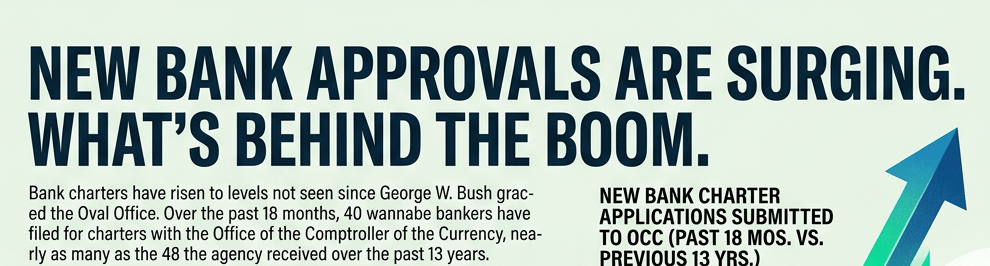
New Bank Approvals Are Surging: What’s Behind the Boom?
The financial industry is witnessing an extraordinary increase in new bank approvals, a trend that recalls the energetic climate of the early 2000s, specifically when George W. Bush was in office. Over the past 18 months alone, 40 aspiring bankers have submitted applications for bank charters to the Office of the Comptroller of the Currency (OCC). This figure stands in stark contrast to the mere 48 applications received over the previous 13 years, showcasing an unprecedented surge in bank beginnings.
The Surge in Applications
The rise in bank charter applications signals a shift in the banking landscape. As more individuals and groups seek to establish new banks, industry experts are probing the reasons behind this boom. Notably, the fact that nearly as many charter applications were filed in just 18 months as were filed in the previous 13 years raises intriguing questions about the motivations and market conditions driving this pattern.
Factors Behind the Growth
- Consumer Demand for Innovation: Today’s consumers are increasingly seeking innovative banking solutions tailored to their needs. New entrants in the market are capitalizing on this demand by offering personalized services and advanced technologies, which traditional banks may not provide.
- Regulatory Changes: The regulatory environment has evolved, becoming more conducive to the establishment of new financial institutions. Streamlined processes and favorable conditions provided by the OCC encourage aspiring bankers to apply for charters.
- Financial Inclusivity: Many of the new banks aim to address gaps in the market, particularly in underserved communities. They seek to provide services to individuals and businesses that may have been overlooked by larger, established banks.
- Technological Advancements: With the rise of fintech, technology has transformed the banking industry. Start-ups leverage cutting-edge technology to deliver enhanced customer experiences, thereby attracting a younger demographic interested in digital banking solutions.
- Shifts in Economic Conditions: Recent economic fluctuations may have prompted entrepreneurs to explore new opportunities within the financial sector as they adapt to changing consumer behaviors and economic realities.
Conclusion
The surge in new bank approvals marks a significant development in the financial landscape. It highlights not only the changing dynamics of consumer demand but also the broader implications for the banking industry as a whole. As traditional banking models face challenges and adapt to new market conditions, these start-ups represent a wave of innovation that could reshape how banking services are delivered.
While artificial intelligence and data centers capture much of the spotlight in today’s technological discussions, it’s essential not to overlook the heated activity occurring within the banking sector. Bank start-ups are proving to be a hot trend, indicating a new era of entrepreneurial spirit in finance that could have lasting implications for consumers and the industry alike.
Read more via Barron’s
 Media Air Base LLC
Leave a comment