Navigating the Storm: Impact of Potential Fed Rate Hikes on Financial Markets
Posted 9/12/2026 2:56PM ET read more via MarketWatch
As the financial markets brace for a likely interest rate hike from the Federal Reserve next week, two pivotal questions loom large: How high will the rates soar, and what implications will tighter monetary policy have on the stability of financial markets?
The anticipation surrounding the Fed’s decision reflects broader economic concerns, particularly in light of rising inflation and changing market dynamics. Investors will be closely monitoring the potential impact of these changes, as increased rates could lead to higher borrowing costs and a slowdown in consumer spending.
Furthermore, the prospect of tighter monetary policy raises the question of whether it will trigger instability within financial markets. Historically, shifts in interest rates can create turbulence, influencing everything from stock prices to bond yields. As we await the Fed’s announcement, the speculation around these developments underscores the intricate relationship between monetary policy and market performance.
Stay tuned, as the outcome of this meeting could set the tone for the economy in the months to come.
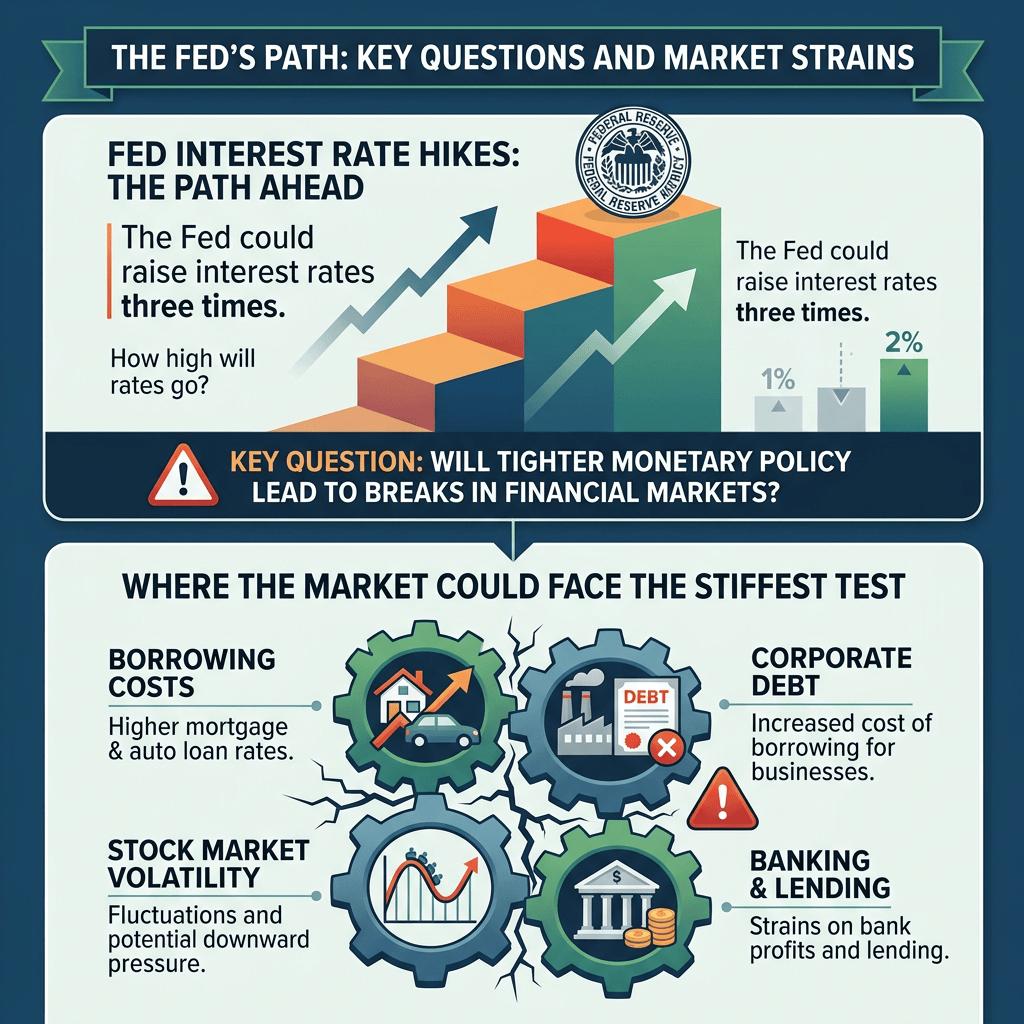
How High Will Interest Rates Go and Will Tighter Monetary Policy Break Financial Markets?
With financial markets convinced that the Federal Reserve is poised to hike interest rates next week, it raises two essential questions: How high will these rates soar, and could a tightening of monetary policy lead to instability in financial markets?
Anticipation of Rate Increases
The speculation surrounding the Federal Reserve’s decision is fueled by ongoing economic shifts characterized by rising inflationary pressures and evolving market dynamics. Analysts predict that the Fed could implement three rate hikes over the coming months, yet the exact trajectory remains uncertain. Economists and market participants are keen to decipher the Fed’s signals, as even minor increases can significantly impact the economy.
Implications of Higher Borrowing Costs
As the Fed contemplates an increase in interest rates, one of the foremost concerns is the effect these changes will have on borrowing costs. Higher interest rates typically lead to increased expenses for consumers and businesses seeking loans, which can result in a slowdown in spending. The ripple effect of reduced consumer confidence can also impact economic growth, creating potential headwinds for various sectors.
Potential Market Reactions
The prospect of tighter monetary policy introduces the possibility of turbulence within financial markets. Historically, adjustments in interest rates have triggered volatility, often causing fluctuations in stock prices, bond yields, and other financial instruments. Investors will be watching closely to gauge how these changes affect market sentiment.
For instance, sectors reliant on consumer spending, such as retail and housing, may experience the stiffest tests as increased borrowing costs could dampen demand. In contrast, financial institutions might benefit in the short term from higher interest income, yet increased rates can also lead to higher defaults if consumers struggle to manage their debt levels.
Conclusion
As the markets await the Fed’s announcement, the interconnectedness of monetary policy and market performance becomes increasingly apparent. The outcome of the Fed’s rate-setting meeting has the potential to shape not only financial markets but also broader economic trends in the months ahead. Investors, businesses, and consumers alike should remain vigilant as they navigate the implications of these potential adjustments in interest rates.
Read more via MarketWatch
 Media Air Base LLC
Leave a comment