Canada’s 50% Retaliatory Tariffs on U.S. Goods: A Response to Trade Disputes
Posted August 26, 2026 6:11AM ET read more via BBC
In a significant move that underscores the ongoing trade tensions between Canada and the United States, Canada has announced a series of retaliatory tariffs aimed at U.S. goods. These tariffs could reach as high as 50%, representing a substantial financial impact on American exports. The decision comes in response to specific U.S. trade policies that Canada deems unfair.
The retaliatory measures are expected to affect various sectors, including agriculture, manufacturing, and consumer goods, potentially leading to increased prices for Canadian consumers. Officials believe that the tariffs are necessary to protect Canadian industries and send a clear message regarding trade equity.
As both countries navigate this complex trade landscape, businesses and consumers alike will be closely watching how these tariffs will influence prices and availability of goods. This latest development highlights the delicate balance of international trade relations and the importance of ongoing dialogue between Canada and the U.S. to resolve these issues amicably.
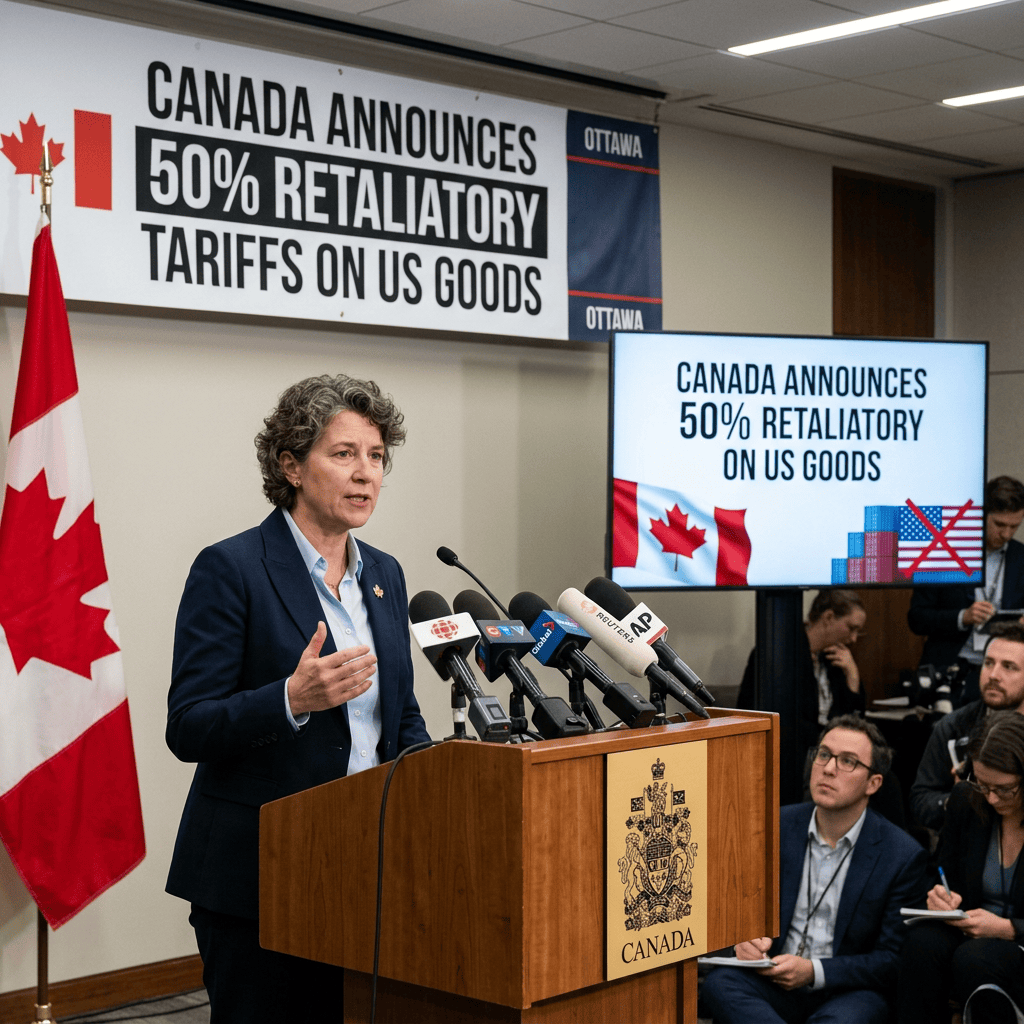
Canada Announces ‘Dollar-for-Dollar’ Retaliatory Tariffs on U.S. Goods
In a notable escalation of trade tensions, Canada has officially announced a series of retaliatory tariffs on U.S. goods, reflecting the ongoing disputes between the two neighboring countries. This decision was made in response to U.S. trade policies that Canada considers inequitable, aiming for a ‘dollar-for-dollar’ approach to counteract perceived injustices in trade practices.
Details of the Tariffs
The announced tariffs could reach as high as 50%, potentially affecting a range of sectors such as agriculture, manufacturing, and consumer goods. This significant measure indicates the seriousness with which Canada is addressing its trade grievances, and it is expected to have a marked impact on American exports.
Officials have stated that these tariffs are not just a punitive measure but are also intended to safeguard Canadian industries that have been disadvantaged by current U.S. trade policies. As such, the Canadian government believes that these tariffs are necessary to achieve a level playing field in international trade relations.
Economic Impact
The imposition of these tariffs will likely lead to increased prices for Canadian consumers, as businesses adjust their pricing strategies in response to higher costs on imported U.S. goods. This creates a ripple effect throughout the economy, with potential implications for inflation and consumer spending.
Furthermore, industries reliant on U.S. exports may face significant challenges, as retaliatory tariffs can disrupt supply chains and market access. The agricultural sector, in particular, is expected to feel the pinch due to its heavy reliance on exports to the U.S. market.
Monitoring Trade Relations
As both Canada and the U.S. navigate this challenging trade landscape, the impact of these tariffs will be closely monitored by businesses and consumers alike. Stakeholders are keen to understand the long-term repercussions of this decision on price stability and the availability of goods in the Canadian market.
The unfolding situation serves as a reminder of the delicate balance inherent in international trade relations. It underscores the pressing need for continued dialogue and negotiation between Canada and the U.S. to resolve these disputes in a manner that is equitable for both nations.
In conclusion, Canada’s decision to implement these ‘dollar-for-dollar’ tariffs marks a significant and strategic response in the ongoing dialogue regarding trade equity with the U.S. As both countries forge ahead, the implications of this move will continue to unfold, impacting various economic sectors and influencing cross-border relations.
Read more via BBC
 Media Air Base LLC
Leave a comment