The Dual Role of the Dollar: Safe Haven and Economic Indicator
Posted 10/7/2026 3:53AM ET read more Barron’s
The strength of the U.S. dollar plays a crucial role in the global financial landscape, particularly when compared to other major currencies. A strong dollar is often seen as a signal of safe-haven demand. During periods of economic uncertainty, investors tend to retreat from riskier markets and seek the stability offered by U.S. assets. This influx highlights a broader trend where the dollar becomes a preferred refuge for those looking to safeguard their investments.
Conversely, a robust dollar can also reflect growing confidence in the U.S. economy. When investors believe in the potential for strong economic growth in the United States, they are more likely to choose the dollar over other currencies. Thus, the dollar’s strength can serve as both a marker of safety in turbulent times and an indicator of optimism regarding the U.S. economic outlook. Understanding these dynamics is essential for investors and market participants navigating the complex world of currency trading.
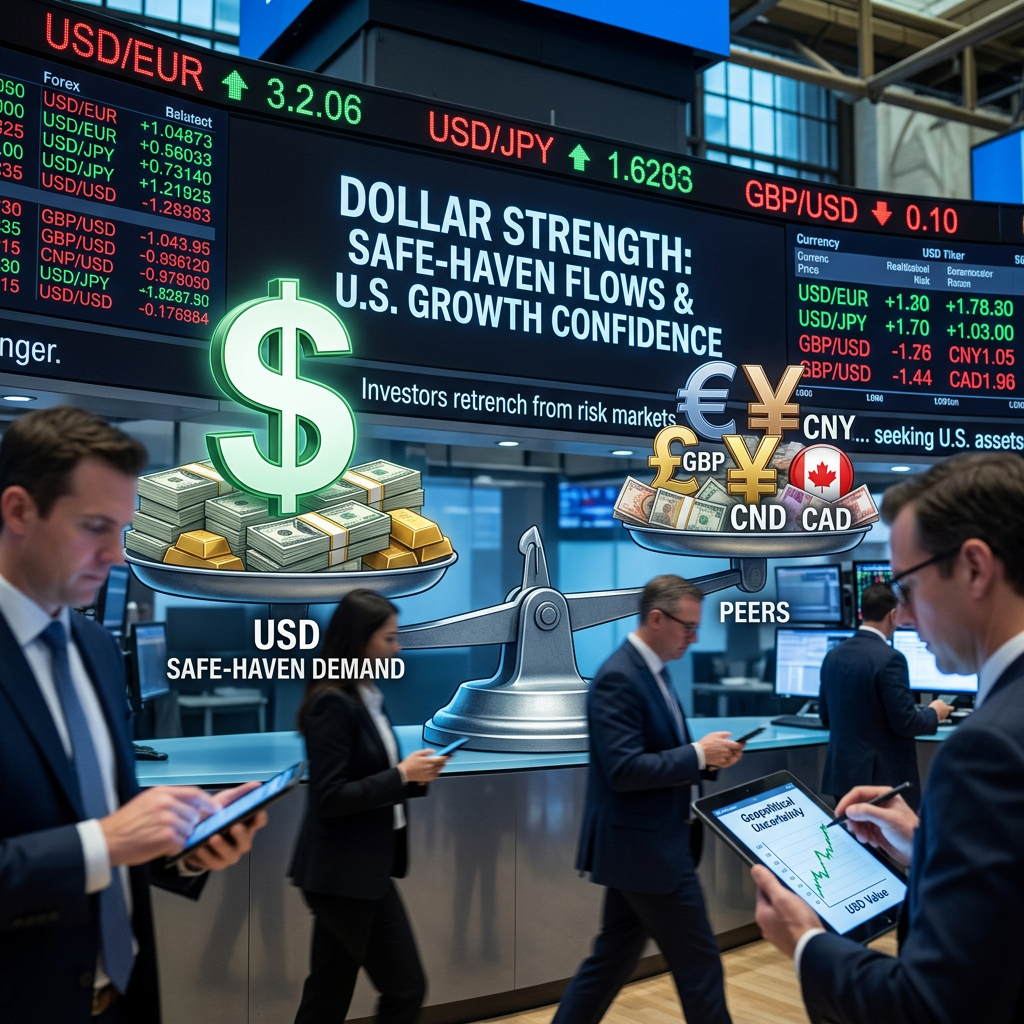
Understanding Dollar Strength: A Dual Signal in Global Markets
The U.S. dollar’s strength is a pivotal element in the global financial landscape, serving as both a barometer of safe-haven demand and an indicator of confidence in the American economy. Analyzing the dynamics behind dollar strength reveals much about the broader market sentiments, particularly during periods of uncertainty or growth optimism.
Safe-Haven Demand
In times of economic turbulence, investors often seek refuge in stable assets, and the U.S. dollar has historically been a primary choice. This phenomenon, known as safe-haven demand, arises when investors shift their focus away from riskier markets. Events such as geopolitical tensions, financial crises, or unpredictable market conditions can spur this behavior. As investors flock to the dollar, it tends to appreciate against other currencies, reflecting heightened demand for U.S. assets perceived as safer.
The influx of capital into the dollar can have several implications. Firstly, it underscores the dollar’s role as a reliable store of value. When global market conditions are shaky, confidence in U.S. government bonds and other dollar-denominated assets grows, further solidifying the dollar’s status as a safe haven. This behavior leads to an appreciating dollar, which, while beneficial for investors holding U.S. assets, can challenge foreign economies reliant on exports, as a stronger dollar makes their goods more expensive in comparison.
Confidence in U.S. Growth
On the flip side, a strong dollar can also illustrate burgeoning confidence in the U.S. economy. When investors believe in the potential for robust economic growth, they are more inclined to invest in dollar assets, enhancing demand for the currency. This might occur during periods of favorable economic data, such as improving GDP figures, rising employment rates, or consumer spending growth.
In this context, the dollar’s strength not only reflects stability but also optimism regarding America’s economic prospects. Investors buying into the dollar during growth periods are essentially betting on the resilience and potential of the U.S. economy to sustain its momentum.
The Balance of Strength and Implications
The interplay between safe-haven demand and growth confidence creates a complex relationship in the value of the dollar. While a strong dollar can instill confidence and attract investments, it also has ramifications for international trade and economic relationships. A consistently strong dollar may lead to trade imbalances by making U.S. exports more expensive and imports cheaper, challenging U.S. manufacturers in competitive global markets.
In summary, the strength of the U.S. dollar serves as a dual indicator of market sentiment. It reflects a retreat to safe investments during times of uncertainty while also embodying investor confidence in American economic growth. Understanding these aspects is crucial for market participants navigating the inherently volatile currency trading landscape. As the financial landscape continues to evolve, monitoring dollar strength will remain essential for gauging investor sentiment and economic outlook around the globe.
Read more via Barron’s


Leave a comment