Navigating Rising Airfares: Why Airlines May Not Profit Despite Increased Ticket Prices
Posted 10/6/2026 5:59AM ET read more CNBC
As travelers prepare for a busy season, many are bracing for rising airfares. A combination of factors is contributing to this trend, including increased demand, fluctuating fuel prices, and ongoing operational challenges faced by airlines. Despite these rising costs for consumers, it may not translate into substantial profits for the airlines themselves.
Airlines are grappling with high expenses related to staffing shortages, maintenance, and fuel. While they might increase ticket prices to offset some of these costs, operational inefficiencies can hinder their profitability. Additionally, competition remains fierce, as budget airlines often undercut prices to attract travelers, limiting how much legacy carriers can raise their fares without losing customers.
Moreover, economic uncertainties may lead consumers to reconsider their travel plans, affecting overall demand. Thus, while ticket prices might continue to climb, the pressure on airlines to maintain competitive pricing could keep profit margins lower than anticipated. The industry is caught in a delicate balance, where rising fares may not guarantee higher profits, leaving both travelers and airlines navigating uncertain skies.
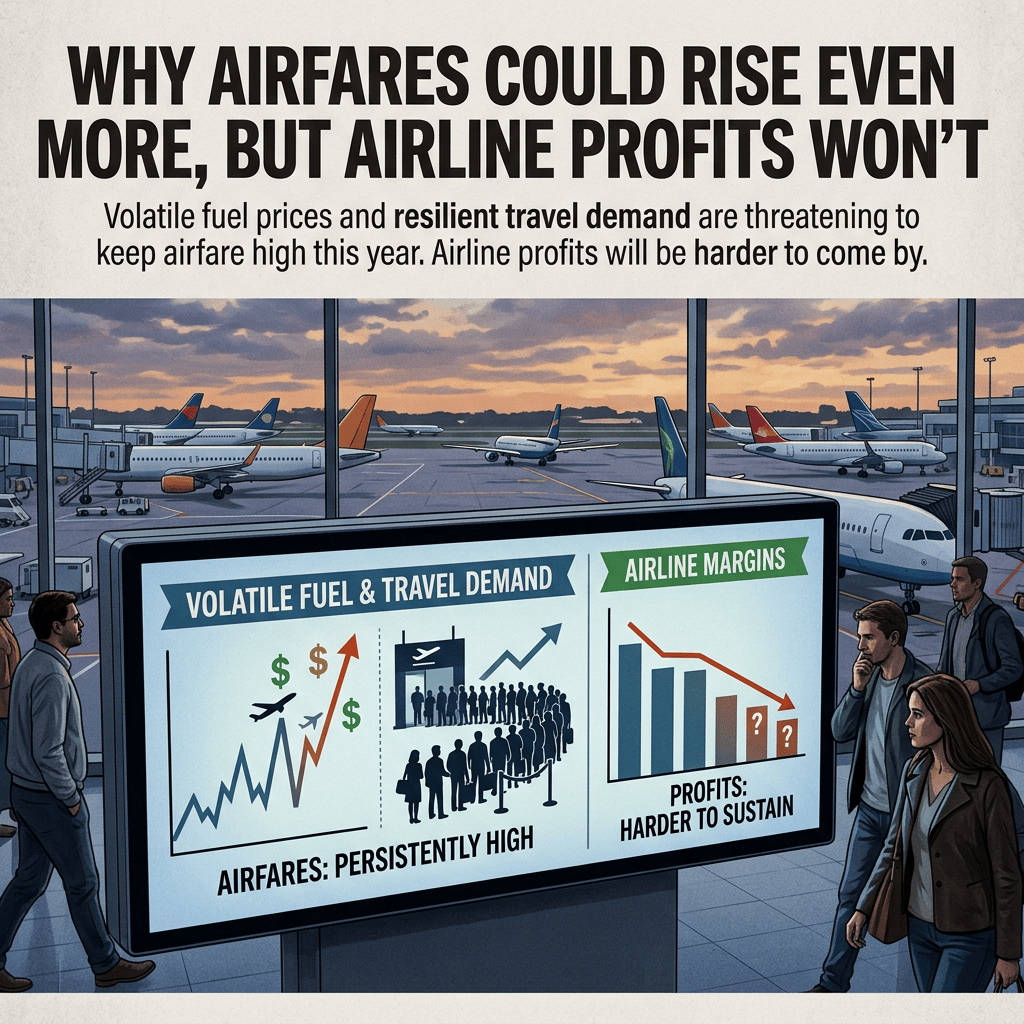
Why Airfares Could Rise Even More, but Airline Profits Won’t
Volatile fuel prices and resilient travel demand are threatening to keep airfare high this year. As we delve into the dynamics of the airline industry, it becomes evident that the situation is more complex than it appears at a glance. While ticket prices are on the rise, the same cannot be said for airline profits, which may remain elusive for many carriers.
The Influence of Fuel Prices
Fuel prices are a significant factor in the operational costs of airlines. As global markets fluctuate, airlines find themselves at the mercy of these volatile prices. When fuel prices rise, airlines often have no choice but to increase ticket prices to maintain their profit margins. However, this approach can become a double-edged sword. Consumers, grappling with their own financial constraints, may be less willing to pay higher fares, leading to decreased demand.
Resilient Travel Demand
Despite rising costs, travel demand has shown resilience in recent years. Many consumers are eager to travel, driven by a pent-up desire for experiences following extended periods of restrictions due to the pandemic. This demand can push airlines to elevate their fares, especially during peak travel times. However, as previously mentioned, higher airfares do not guarantee higher profit margins for airlines.
Operational Challenges
Operational challenges continue to plague the airline industry. Staffing shortages, increased maintenance costs, and logistical issues add additional burdens that affect profitability. Airlines may attempt to pass these expenses onto consumers in the form of higher ticket prices, but inefficiencies and setbacks can limit their ability to realize substantial gains.
Competition in the Industry
The competitive nature of the airline industry plays a crucial role in pricing strategies. Budget airlines are known for undercutting prices to attract travelers, creating a price-sensitive market. This means that while legacy carriers may wish to increase fares to offset costs, they must consider the risk of losing customers to more affordable alternatives. The constant pressure to remain competitive can significantly cap the potential for profit even amidst higher ticket prices.
Economic Uncertainties
Economic factors can also influence consumer behavior. In times of economic uncertainty, travelers may reconsider their travel plans altogether, affecting overall demand for flights. Consequently, airlines face a tricky balancing act; while they need to raise fares in response to rising costs, doing so could deter customers and reduce their overall passenger numbers.
Conclusion
In summary, the airline industry is navigating a precarious landscape where airfares may continue to rise due to factors such as volatile fuel prices and sustained travel demand. However, these rising costs do not guarantee increased profitability for airlines, as operational challenges, fierce competition, and economic uncertainties create significant hurdles. As travelers and airlines alike adjust to these realities, the path forward remains uncertain, with both parties contending with the complexities of an evolving market.
Read more via CNBC


Leave a comment