Rising Borrowing Costs: The Impact of U.S. Treasury Sell-Off on Junk-Rated Companies
Posted 10/6/2026 3:52AM ET read more Financial Times
In recent months, corporate America has been grappling with a significant rise in borrowing costs, a trend that is reshaping the financial landscape for many businesses. As interest rates climb, companies are facing increased expenses when it comes to financing operations, expanding investments, and managing existing debts.
This uptick in borrowing costs can be attributed to several factors, including monetary policy adjustments aimed at curbing inflation. As the Federal Reserve raises interest rates, the cost of loans and bonds has risen correspondingly, putting pressure on corporations to evaluate their financial strategies.
Businesses are now more than ever reconsidering their capital expenditures and may delay or downsize their expansion plans. This shift not only affects the companies themselves but also ripples through the economy, potentially slowing down growth and impacting job creation.
As corporate leaders navigate these turbulent waters, they must find innovative solutions to manage their finances effectively. Balancing the need for growth while containing costs will be crucial in this evolving economic climate. The surge in borrowing costs serves as a reminder of the interconnectedness of financial markets and the importance of strategic financial planning.
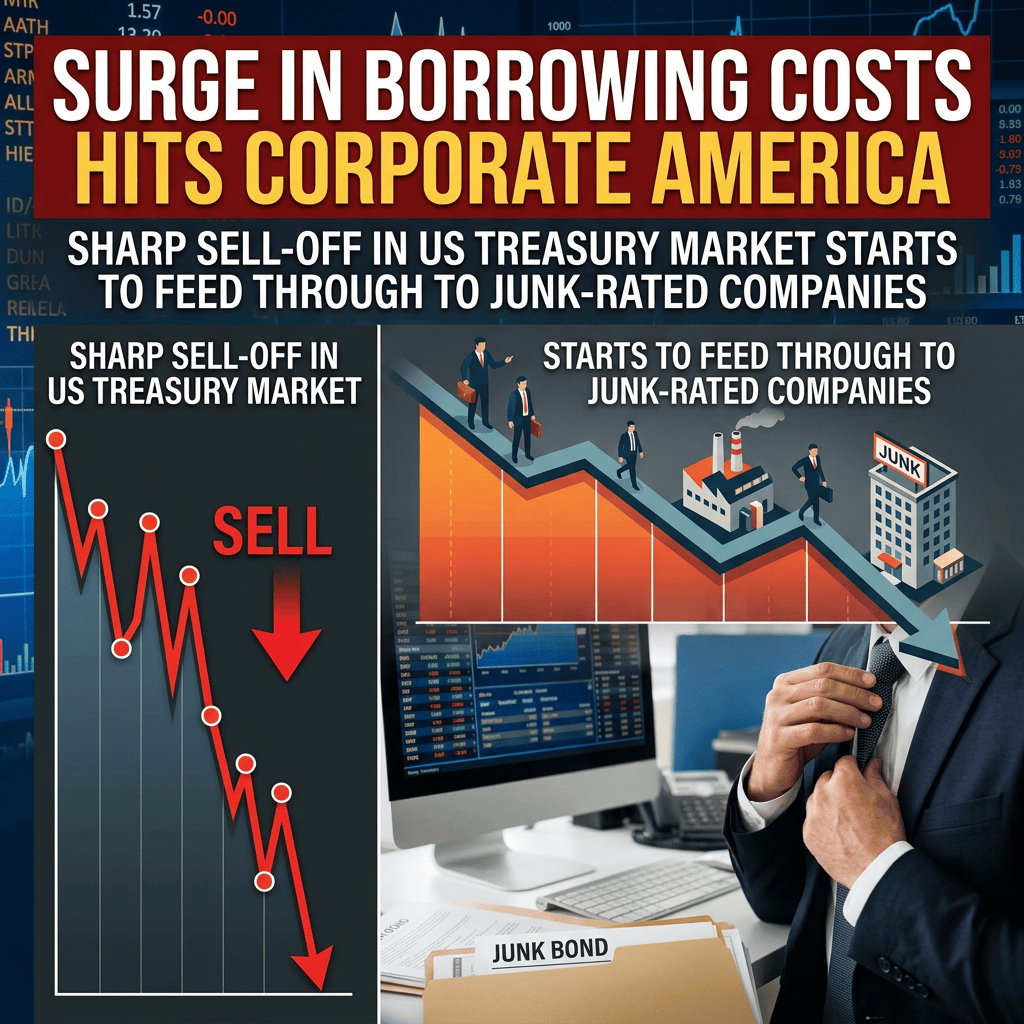
Surge in Borrowing Costs Hits Corporate America
In recent months, corporate America has faced a critical shift in the financial landscape, marked by a significant rise in borrowing costs. As interest rates increase, the implications for businesses are profound, affecting everything from operational financing to expansion plans.
This surge in borrowing costs is largely a result of monetary policy adjustments implemented to combat inflation. The Federal Reserve has been active in raising interest rates, which has led to higher expenses associated with loans and bonds. For many corporations, this means a reassessment of financial strategies is imperative. Companies are now finding it increasingly challenging to finance operations and manage their existing debts as the cost of capital rises.
A direct consequence of these higher borrowing costs is a strategic reconsideration of capital expenditures. Businesses are likely to delay or scale back their expansion initiatives, a move that can have cascading effects on economic growth and job creation. As companies pivot to manage their finances effectively, they must balance the imperative for growth with the need to contain costs. The emphasis on financial prudence has never been more pronounced, highlighting the interconnected nature of financial markets and the critical importance of strategic financial planning in an evolving economic landscape.
Sharp Sell-Off in US Treasury Market Starts to Feed Through to Junk-Rated Companies
The troubling trend of rising borrowing costs has been exacerbated by a sharp sell-off in the U.S. Treasury market, signaling significant market volatility. This sell-off is not just an isolated occurrence; it is beginning to spill over into the realm of junk-rated companies, which are particularly susceptible to fluctuations in borrowing costs.
The connection between the Treasury market and higher yields is direct. As investors react to selling pressures in Treasuries, yields rise, consequently increasing the cost of borrowing for all entities, especially those with lower credit ratings. Junk-rated companies, which already operate at higher risk, are subjected to a particularly intense financial squeeze as they look to secure financing in an environment characterized by escalating costs.
The implications for these companies are dire. Rising costs can lead to tightened profit margins, making it more challenging for them to service existing debts and pursue new growth opportunities. Investors are becoming increasingly cautious, which can further restrict access to capital for junk-rated firms.
As the financial landscape evolves, the ripple effects of the Treasury market’s volatility are likely to continue influencing the broader corporate sector. Companies must prepare for a challenging future and develop innovative strategies to navigate the uncertainties of borrowing costs and market condition
As these trends unfold, both corporate leaders and investors will need to stay alert and adaptive to the ongoing shifts in the economic landscape, fostering resilience amidst the challenges posed by rising borrowing costs and market volatility.
Read more via Financial Times


Leave a comment