Navigating Retirement: The Balance Between Stock Markets and Interest Rates
Posted 10/2/2026 3:50AM ET read more MarketWatch
Navigating the realm of retirement planning can often feel like a balancing act, especially when considering the interconnectedness of stock markets and interest rates. As retirees rely on investment returns to sustain their lifestyle, it is crucial to understand how these factors influence their financial health.
Stock markets can offer significant growth opportunities; however, they also carry inherent risks. In times of economic uncertainty, market volatility can impact the value of retirement portfolios. On the other hand, interest rates play a vital role in determining the returns on fixed income investments, which are often favored by retirees for their relative stability.
When interest rates rise, fixed-income investments typically provide higher yields, making them more attractive. Conversely, higher rates can lead to decreased stock market performance, as borrowing costs rise and consumer spending may decline. This delicate interplay means that retirees must carefully strategize their asset allocation to balance growth from stocks and income from bonds.
Ultimately, understanding the relationship between stock markets and interest rates empowers retirees to make informed decisions that can enhance their financial security throughout their golden years. By keeping a close eye on these factors, individuals can better navigate the complexities of retirement income planning and work towards achieving a balanced financial future.
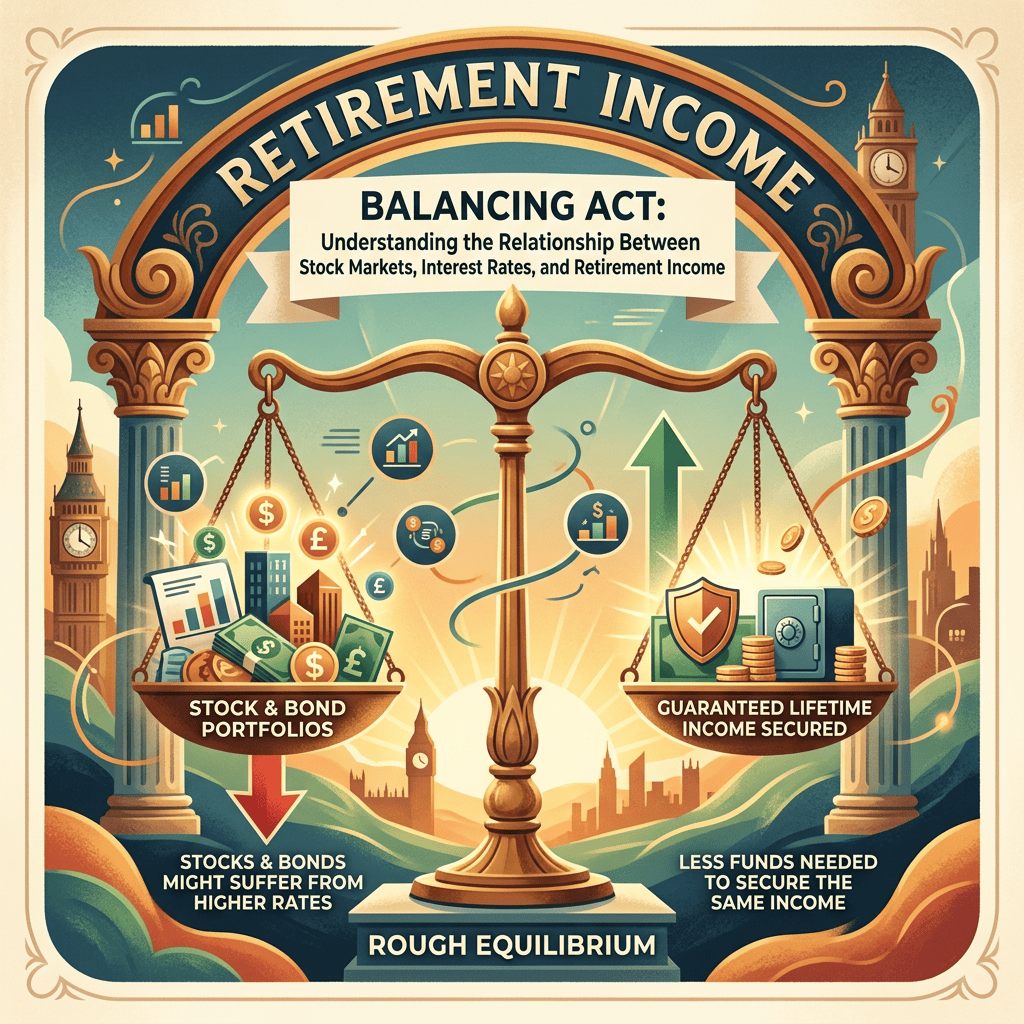
Balancing Act: Understanding the Relationship Between Stock Markets, Interest Rates, and Retirement Income
Retirement planning is often likened to a balancing act, as it requires careful consideration of various economic factors that can significantly impact financial stability during one’s golden years. Among these factors, the relationship between stock markets, interest rates, and the cost of acquiring retirement income stands out as particularly crucial.
The Interconnectedness of Stock Markets and Interest Rates
At its core, a rough equilibrium exists between the stock market, interest rates, and the cost of securing a guaranteed lifetime income. When interest rates rise, it can create a challenging environment for both stock and bond portfolios. Typically, rising interest rates mean higher yields on fixed-income investments, presenting an attractive option for retirees seeking stability. However, the downside is that higher rates can lead to a decline in stock market performance, as increased borrowing costs may inhibit consumer spending and slow economic growth.
Retirees often rely on investment returns to maintain their lifestyle, which makes it essential to understand how these dynamics play out. The relationship is not merely a straightforward cause-and-effect scenario; rather, it is a delicate interplay that requires retirees to carefully strategize their asset allocation.
Impacts of Higher Interest Rates
While higher interest rates can lead to decreased values in stock and bond portfolios, they also create a positive effect: it takes less capital to secure a similar standard of living in retirement. This means that retirees can achieve their financial goals with a smaller investment in guaranteed lifetime income products, such as annuities.
For example, with higher interest rates, the income generated from these fixed-income investments can be sufficient to support a retiree’s lifestyle, which can alleviate the stress of relying solely on stock market performance. This scenario emphasizes the importance of understanding the current economic climate when planning for retirement income.
Asset Allocation Strategies
To effectively manage the risks associated with market volatility and interest rate fluctuations, retirees must adopt a well-balanced investment strategy. This often involves diversification across various asset classes, including stocks, bonds, and alternative investments.
- Stocks for Growth: While stocks carry inherent risks due to market volatility, they can provide significant growth opportunities, especially during bullish market conditions. It is crucial to have a portion of the portfolio dedicated to equities to chase higher returns.
- Bonds for Stability: Fixed-income investments become increasingly attractive during periods of rising interest rates as they can offer higher yields. Retirees should consider allocating a part of their portfolio to bonds, which can provide a reliable source of income.
- Guaranteed Income Products: Annuities and similar products can provide peace of mind by ensuring a guaranteed income stream. As interest rates rise, the cost of securing these income sources may decrease, allowing retirees to lock in favorable terms.
Conclusion
Understanding the relationship between stock markets and interest rates is key for retirees aiming to enhance their financial security over time. By recognizing how higher interest rates can influence their income strategies and investment allocations, individuals can make informed decisions that support their long-term financial health.
Ultimately, navigating the complexities of retirement income planning requires continual assessment of economic conditions and a willingness to adapt to changing circumstances. By maintaining a balanced approach that incorporates both growth and income strategies, retirees can better position themselves for a secure and fulfilling retirement.
Read more via MarketWatch


Leave a comment