White House Defends Media Access Ban: A Controversial Assertion of Control
Posted 9/23/2026 4:32AM ET read more New York Times
In a recent court filing, the White House has defended its decision to impose a media ban on certain outlets, stating that access is a “privilege.” President Trump asserted that CNN, MSNBC, and Politico had violated the standards of professionalism and decorum expected at the White House. This move has sparked discussions about the relationship between the media and government, seeing as access to the White House is often seen as a cornerstone of a free press. As debates continue, the implications of such bans on transparency and accountability are at the forefront of public discourse.
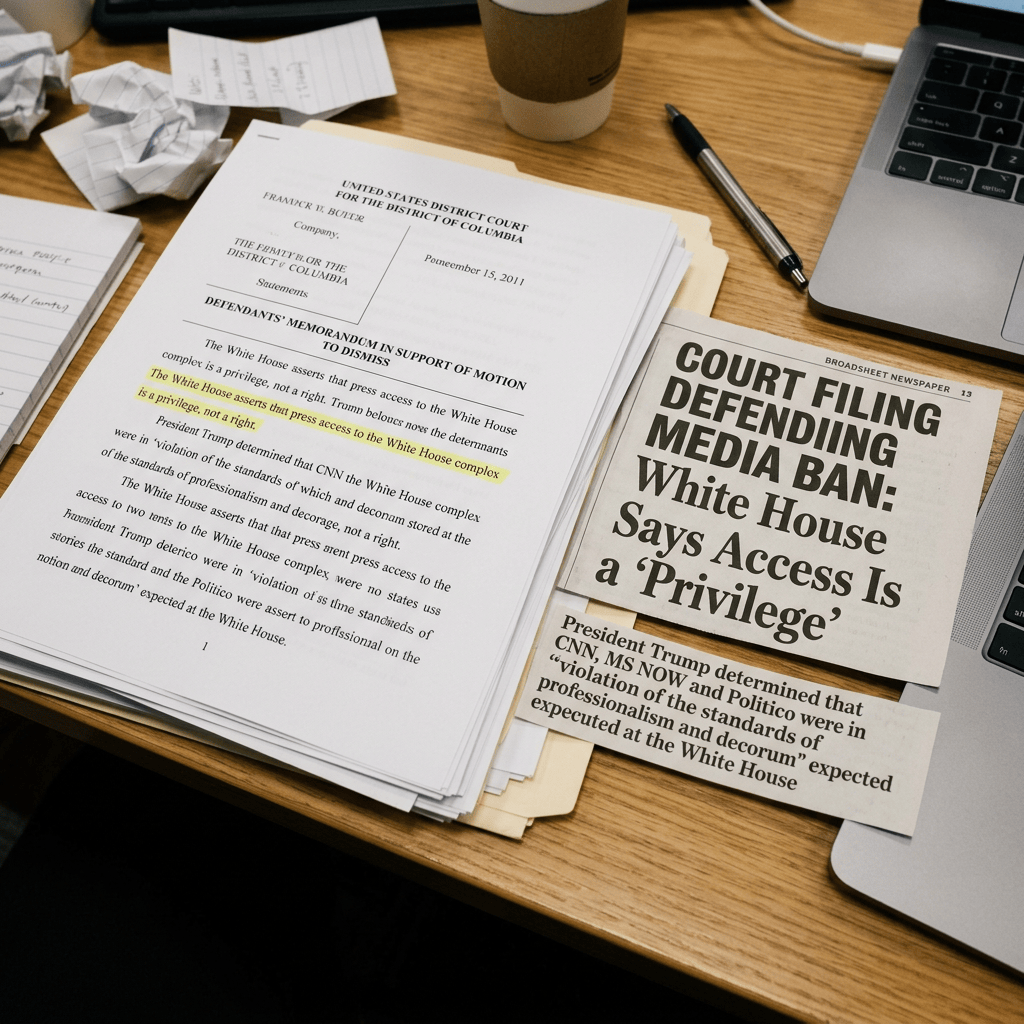
In Court Filing Defending Media Ban, White House Says Access Is a ‘Privilege’
In a notable court filing, the White House has justified its controversial media access restrictions, labeling it as a “privilege.” This assertion grows out of President Trump’s determination that specific news organizations, including CNN, MSNBC, and Politico, have breached the expected standards of professionalism and decorum fundamental to the operation of the White House. The implications of this stance have sparked intense discussions concerning the inherent relationship between the media and the government, particularly regarding transparency and accountability.
Background on the Media Ban
The media ban, initially implemented by the Trump administration, specifically targets networks that the President believes have failed to uphold journalistic integrity in their coverage. By stating that access to the White House is a privilege, the administration is framing the narrative around media access as a controlled engagement rather than an unconditional right. Critics argue that this limits the freedom of the press, a vital component of a democratic society.
Arguments for the Ban
In the court filing, officials defended the decision by underscoring that maintaining decorum and professionalism is essential for the functioning of the executive branch. They claim that the actions of CNN, MSNBC, and Politico undermine the trust and respect necessary for effective communication between the government and the press. By establishing stringent criteria for media access, the administration aims to ensure that journalists adhere to a certain standard that aligns with the White House’s expectations.
Public and Legal Reactions
The assertion that media access is a privilege has provoked a whirlwind of public debate and legal scrutiny. Advocates for press freedom argue that restricting access sets a dangerous precedent and undermines the fundamental principles of a free press. They contend that the function of the media is to hold power accountable, and limiting access runs contrary to this democratic role. Legal experts have also chimed in, suggesting that such a policy might prompt challenges in court, as it could violate First Amendment rights.
Impact on Transparency and Accountability
The discussions surrounding this media ban raise critical questions about transparency and accountability in government. Access to the White House has historically been viewed as essential for journalists to report on government activities and to inform the public. If access is controlled based on perceived professionalism, there are concerns that this could result in selective reporting and a lack of diverse perspectives in the media landscape.
Conclusion
As this situation develops, the relationship between the media and the government remains a focal point of public discourse. The White House’s defense of its media ban illustrates a pivotal moment in the ongoing conversation about the boundaries of press freedom and the expectations of professionalism within the framework of governmental communication. As debates continue to unfold, the implications for journalism and public trust remain profound, demanding vigilance and advocacy for the principles of a free and open press.
Read more via New York Times


Leave a comment