Exploring the Potential of Meta’s Muse: Revolutionizing Consumer Interaction Through AI
Posted 9/22/2026 3:12AM ET read more Business Insider
Muse’s platform strategy stands out as a proven method for engaging users, yet its implementation can be quite challenging. As more individuals start requesting that Muse assist with shopping, booking appointments, comparing products, and managing subscriptions, the demand for businesses to provide their services through this agent will grow exponentially. This shift not only highlights the evolving nature of consumer interactions but also emphasizes the importance for businesses to adapt and integrate their offerings into platforms where users are already engaging. As this trend continues, organizations will need to innovate and streamline their services to capture the attention and loyalty of a tech-savvy audience.
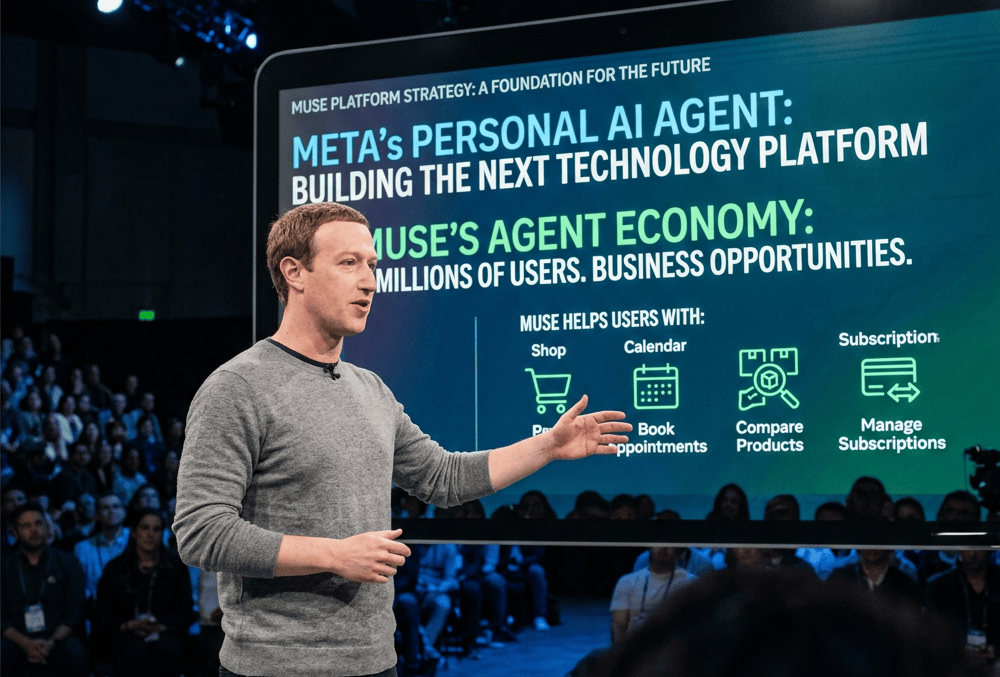
Muse’s Platform Strategy: A Proven but Challenging Approach
With the introduction of Meta’s personal AI agent, Muse, Mark Zuckerberg sees a pivotal opportunity to finally create the technology platform he’s long pursued. Muse’s platform strategy is underpinned by a well-established method for engaging users, but the execution presents significant complexities.
The Demand for Integration
As users become more accustomed to leveraging AI for everyday tasks, the expectations placed on Muse will escalate. The demand for functionalities such as shopping, booking appointments, comparing products, and managing subscriptions will rise sharply. As a result, businesses will increasingly recognize the necessity to make their services accessible through Muse to meet consumer expectations.
Challenges in Implementation
While the idea of integrating services into a singular, user-friendly AI platform is appealing, the execution poses considerable challenges. Businesses must ensure their offerings are not only compatible with Muse but also optimized for interaction with the AI agent. This requires a deep understanding of consumer behavior, as well as advanced technological capabilities.
Furthermore, effective partnerships between Meta and various businesses will be crucial. Companies will need to work closely with Meta to develop seamless integrations, which can be a resource-intensive process.
The Importance of Adaptation
The landscape of consumer interaction is rapidly evolving, and businesses must keep pace to capture the attention and loyalty of a tech-savvy audience. As Muse takes shape, companies will need to innovate their service delivery models and enhance their digital presence. Failing to adapt could mean missing out on the engagement opportunities that Muse presents.
Conclusion
Meta’s Muse is more than just an AI agent; it represents a potential shift in how consumers interact with technology. Despite the challenges inherent in implementing a robust platform strategy, the benefits of engaging users through Muse could be transformative for businesses. As the demand for AI-driven services grows, savvy organizations will recognize the importance of aligning their offerings with the capabilities of Muse, paving the way for a more integrated and responsive marketplace.
Read more via Business Insider


Leave a comment