10-Year Treasury Yield Exceeds 5%: Federal Reserve’s Rate Hikes and Inflation Concerns
Posted 9/26/2026 4:20PM ET read more CNBC
The recent movement in the 10-year Treasury note yield has captured the attention of investors and market analysts alike, as it has now crossed the critical 5% threshold. This shift comes on the heels of a Federal Reserve rate increase and remarks from Chairman Kevin Warsh, who emphasized the ongoing risks of persistent inflation.
As the Fed continues to navigate economic uncertainties, the rising yield reflects market concerns over inflationary pressures that could linger. Investors will be closely monitoring how these developments influence both bond markets and broader economic conditions in the coming months. With the 5% line now crossed, the implications for borrowing costs, mortgage rates, and overall economic growth could be significant.
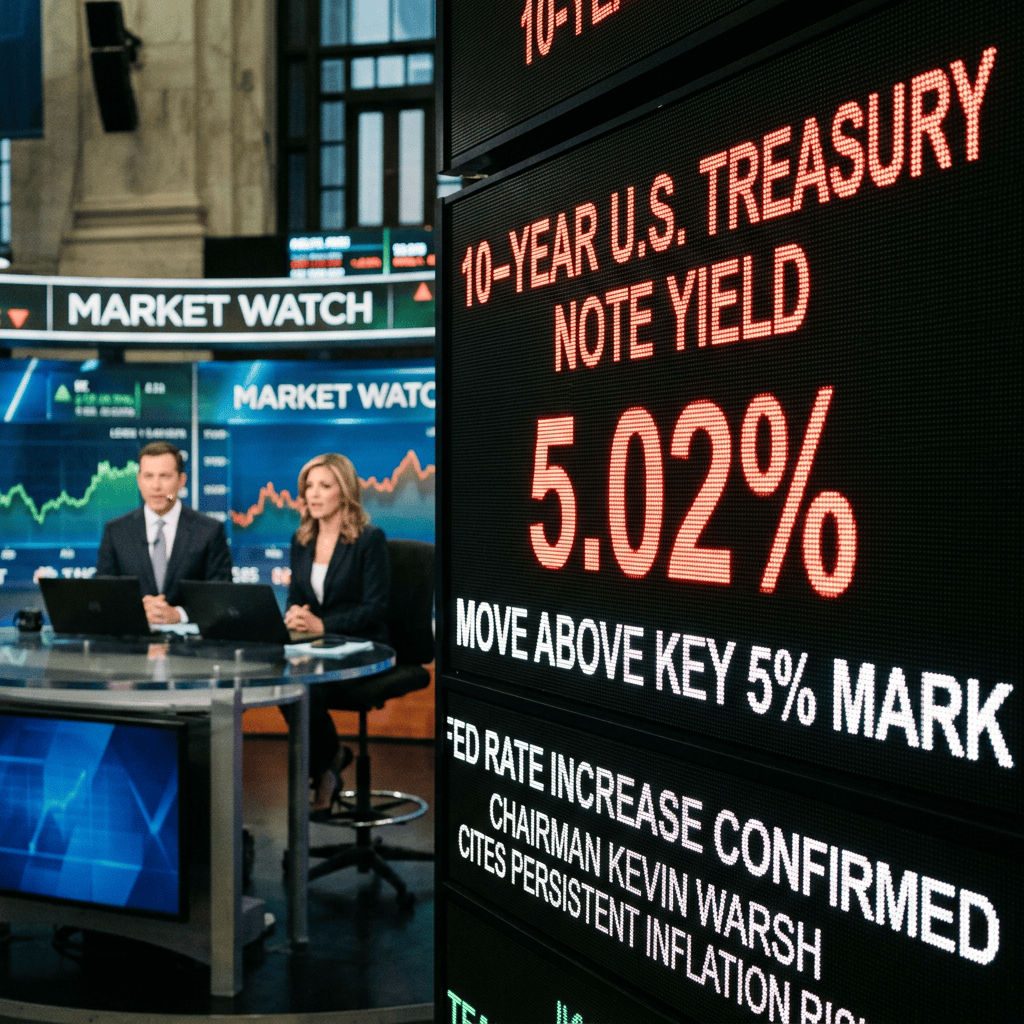
10-Year Treasury Yield Surpasses 5% Amid Federal Reserve Rate Hikes and Inflation Concerns
The financial landscape is experiencing notable changes as the 10-year Treasury yield has recently surged above the pivotal 5% mark. This increase comes on the heels of rate hikes implemented by the Federal Reserve and crucial comments from Chairman Kevin Warsh, which underscore the ongoing challenges posed by persistent inflation.
Understanding the 10-Year Treasury Yield
The 10-year Treasury note yield is a critical indicator of market sentiment and economic health. It reflects the return on investment for U.S. government bonds, significantly influencing various factors within the economy, including borrowing costs for businesses and consumers. When the yield rises, it generally indicates that investors are requiring a higher return for holding government debt, which can signal concerns about economic conditions or inflation.
Reaction to Federal Reserve Policies
The recent climb over the 5% threshold is directly correlated to the Federal Reserve’s decision to raise interest rates in an attempt to combat inflation. By increasing rates, the Fed aims to control rising prices and stabilize the economy. However, such actions can also lead to increased borrowing costs, affecting the housing market and overall economic growth.
Chairman Kevin Warsh’s comments shed light on the Fed’s concerns regarding inflation. His emphasis on the risks of sustained inflation reflects broader worries that prices may not stabilize as swiftly as hoped, leading to further adjustments in monetary policy.
Implications for Investors and Borrowers
The crossing of the 5% line for the 10-year Treasury yield is significant for both investors and the borrowing public. For investors, a higher yield may shift preferences in terms of portfolio management, with many gravitating towards bonds over stocks as the risk-return trade-off changes. Additionally, it could indicate a more cautious approach to risk-taking in the market.
For consumers, especially those looking to secure mortgages or personal loans, the increased yield suggests that borrowing costs may rise as financial institutions adjust their rates in response to the bond market. This trend could potentially cool down segments of the housing market and dampen consumer spending.
Looking Forward
As the Federal Reserve continues to navigate economic uncertainties, the movement in the 10-year Treasury note yield will remain a key focal point for analysts. Investors and economists alike will be closely monitoring how these developments interplay with broader economic conditions in the coming months.
The implications of this rise in yield extend beyond mere statistics; they represent the complex relationship between inflationary pressures, government policy, and market sentiment. Understanding these dynamics will be vital for all stakeholders as the economic landscape evolves in response to both domestic and global factors
In Closing
The 10-year Treasury yield moving above the 5% threshold signals crucial shifts in the financial markets, highlighting the ongoing battle against inflation and the ramifications of Federal Reserve policies. As these narratives unfold, careful observation will be paramount for investors and consumers alike.
Read more via CNBC
 Media Air Base LLC
Leave a comment