Navigating Employee Compensation: The Billion-Dollar Challenge Post-IPO
Posted 9/12/2026 2:20PM ET read more via New York Times
In the world of start-ups, a carefully crafted compensation strategy is crucial for managing expenses, especially during the early stages of growth. Many start-ups adopt methods that keep worker compensation low to conserve cash flow. This approach allows them to allocate resources toward product development, marketing, and scaling the business without the immediate pressure of high payroll costs.
However, this strategy comes with potential drawbacks. As start-ups mature and prepare to go public, they often encounter a significant challenge: billions of dollars in catch-up expenses. These costs can arise from deferred salaries, stock options, and bonuses that were not part of the initial compensation packages. In the rush to attract talent in a competitive market, the financial implications of this catch-up can be overwhelming.
For founders and investors, understanding the balance between managing current expenses and preparing for the future is key. A sustainable compensation strategy not only helps in maintaining startup momentum but also positions the company for seamless growth as it transitions to a publicly traded entity. As the start-up ecosystem evolves, keeping a keen eye on long-term financial consequences while managing short-term expenditures will be pivotal for success.
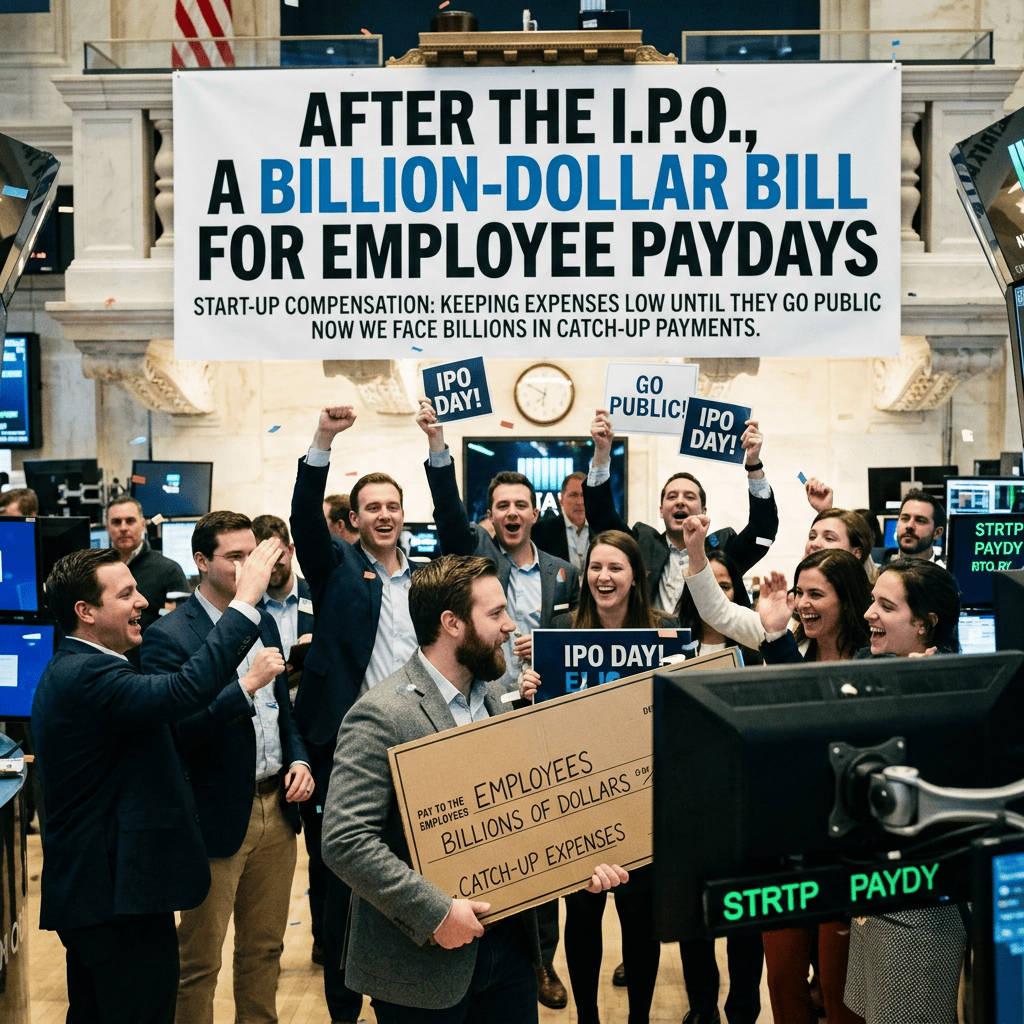
After the I.P.O., a Billion-Dollar Bill for Employee Paydays
In the competitive landscape of start-ups, developing an effective compensation strategy is essential for managing expenses, particularly during the early growth phase. Many start-ups opt for compensation methods that keep worker pay low, allowing them to conserve cash flow for critical areas such as product development, marketing, and scaling operations. This strategy enables start-ups to maintain momentum without the immediate strain of high payroll costs.
The Low-Cost Compensation Strategy
Start-ups often implement a compensation strategy that emphasizes non-monetary benefits, equity, and performance-based incentives. By offering stock options or deferred bonuses rather than high salaries, these companies attract talent while controlling cash expenditures. This approach helps in nurturing an innovative work environment where employees are motivated by the potential for future rewards, aligning their interests with the long-term success of the company.
However, this tactic comes with significant risks. As a start-up matures and gears up for an Initial Public Offering (I.P.O.), it grapples with essential transitional challenges. One of the most pressing issues is the accumulation of deferred compensation — the “catch-up” expenses that can amount to billions of dollars.
The Challenge of Catch-Up Expenses
Following the I.P.O., companies may face a financial reality that was previously overlooked: billions in catch-up expenses owed to employees. These expenses arise from stock options that were promised but not fully realized during the start-up phase, alongside deferred salaries and bonuses that were accrued but not paid out to employees. As the company prepares to go public, it must reconcile these obligations, which can lead to substantial financial strain.
The influx of these catch-up expenses can overwhelm even well-prepared companies, leading to potential disruptions in cash flow and necessitating careful financial planning. This scenario creates a dual challenge for founders and investors: they must balance current expense management while preparing for the long-term financial commitments that an I.P.O. entails.
Strategies for Sustainable Growth
To navigate these complex waters, start-ups must develop a sustainable compensation strategy that anticipates future growth while managing present expenses. A proactive approach involves shifting from highly variable compensation structures to more predictable and manageable salary frameworks as the company nears its I.P.O. This strategy helps to mitigate the risk of a sudden financial burden post-IPO.
Additionally, maintaining open lines of communication with employees about compensation structures and future expectations can help to manage morale and retain top talent during transition periods. A well-structured incentive program that aligns employee performance with company milestones can also ease the transition and keep the workforce engaged and motivated.
Conclusion
In summary, the journey of a start-up from its embryonic phase to a publicly traded company is fraught with complexities. While a low-cost compensation strategy can be an effective way to manage early expenses, it is critical for founders and investors to recognize the potential financial implications of deferred expenses as they prepare for an I.P.O. A balanced approach that incorporates long-term planning and transparent communication can lead to sustainable growth and success in a competitive landscape, ensuring that employees are rewarded fairly as the company transitions into its next chapter.
Read more via New York Times
 Media Air Base LLC
Leave a comment