Rising Spending and Falling Revenues: Examining the $2 Trillion Federal Budget Deficit
Posted 9/12/2026 4:44PM ET read more Fox Business
The landscape of government spending is shifting dramatically, as recent trends reveal a concerning uptick in expenditures. Rising costs associated with Social Security and Medicare are placing a heavier burden on the federal budget. Coupled with this, interest costs on the national debt are also climbing, further straining fiscal resources.
In a troubling turn of events, corporate tax revenue has dropped by a staggering 25% due to recent reforms, exacerbating the situation. This decline in funding raises significant questions about the sustainability of government programs and the potential impact on essential services. As policymakers grapple with these challenges, the need for a balanced approach to reform and spending has never been more pressing.
As we look ahead, it is crucial to monitor how these financial dynamics will influence future budgets and the overall economic landscape. The growing costs of mandatory programs, along with decreasing corporate contributions, could necessitate difficult decisions that may affect a wide swath of the American populace.
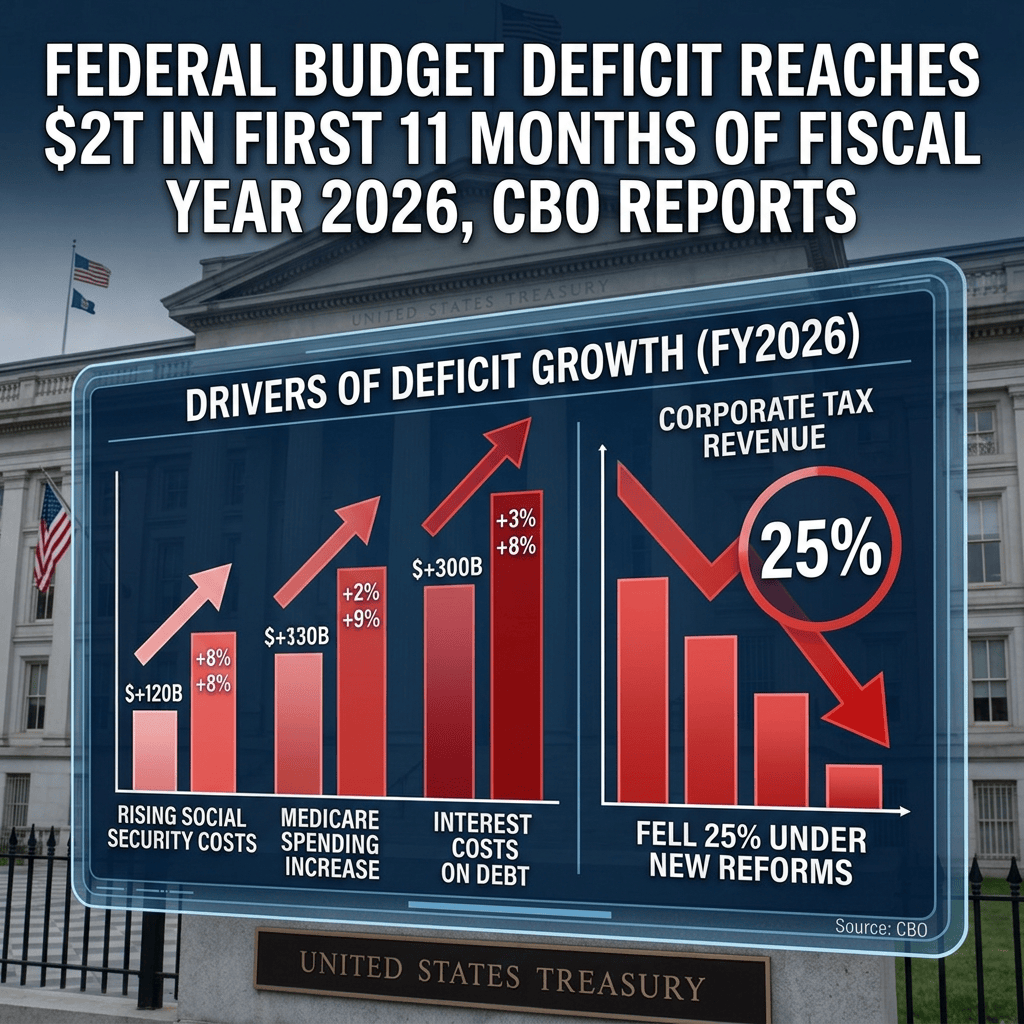
Rising Social Security, Medicare, and Interest Costs Drive Spending Up as Corporate Tax Revenue Falls 25%
The fiscal landscape of the United States is currently facing considerable challenges, as reported by the Congressional Budget Office (CBO). In the first 11 months of fiscal year 2026, the federal budget deficit has reached an alarming $2 trillion, creating significant concern among policymakers and citizens alike. This article explores the factors driving increased spending, including rising costs associated with Social Security and Medicare, coupled with a notable decline in corporate tax revenue.
Increasing Expenditures
Government spending has been on an upward trajectory, primarily due to mandatory programs like Social Security and Medicare. These programs are designed to provide essential support to the elderly and disabled, but their financial sustainability is now in jeopardy. An aging population and rising healthcare costs are two primary factors contributing to the growing expenses in these areas. As more individuals rely on these programs, the federal budget is feeling the strain.
In addition to mandatory spending, interest payments on the national debt are escalating. As the government borrows more to cover its expenditures, interest costs rise, further exacerbating the deficit. With interest rates on the incline, the burden of servicing the debt is expected to continue growing, placing additional pressure on already stretched fiscal resources.
Decline in Corporate Tax Revenue
In a striking turn of events, recent reforms have led to a dramatic 25% decrease in corporate tax revenue. These changes, aimed at stimulating investment and growth, have had the unintended consequence of significantly reducing the funds available for government programs. The drop in corporate contributions poses a critical challenge to the sustainability of essential services, leading to tough decisions ahead for lawmakers.
The decrease in tax revenue occurs at a time when government spending is rapidly escalating due to rising mandatory program costs and debt interest. This combination of increased expenditures and reduced revenues raises significant concerns about the viability of government programs and their ability to respond to the needs of the populace.
The Path Forward
As the federal budget deficit swells to unprecedented levels, it is crucial for policymakers to develop a balanced approach to reform and spending. While the need for investment and growth remains pivotal, it is equally important to consider the implications of current spending habits and revenue policies. Striking a balance between supporting essential services and ensuring fiscal responsibility will be vital as the government navigates these turbulent economic waters.
Looking ahead, it will be imperative to monitor how the financial dynamics surrounding Social Security, Medicare, and corporate tax revenue evolve. The decisions made now will undoubtedly have repercussions on future budgets and the economic landscape as a whole. As the nation confronts these challenges, a comprehensive and strategic approach will be key to ensuring fiscal sustainability for the future.
Read more via Fox Business
 Media Air Base LLC
Leave a comment