US government borrowing costs hit highest level since 2007
Posted July 31, 2026 10:15PM ET
US government borrowing costs have reached their highest levels since the global financial crisis, driven largely by apprehensions surrounding the Iran war. This geopolitical tension raises concerns that the Federal Reserve may be compelled to increase interest rates to stabilize the economy.
As investors evaluate the heightened risks associated with global conflicts, the implications for national debt and fiscal policy become increasingly significant. Understanding these dynamics is crucial for anyone keeping an eye on the economic landscape, as rising borrowing costs could have a ripple effect on various sectors, influencing everything from consumer loans to housing markets.
In the coming weeks, market reactions to both geopolitical events and the Federal Reserve’s monetary policy decisions will be closely watched, as they could determine the direction of the economy moving forward.
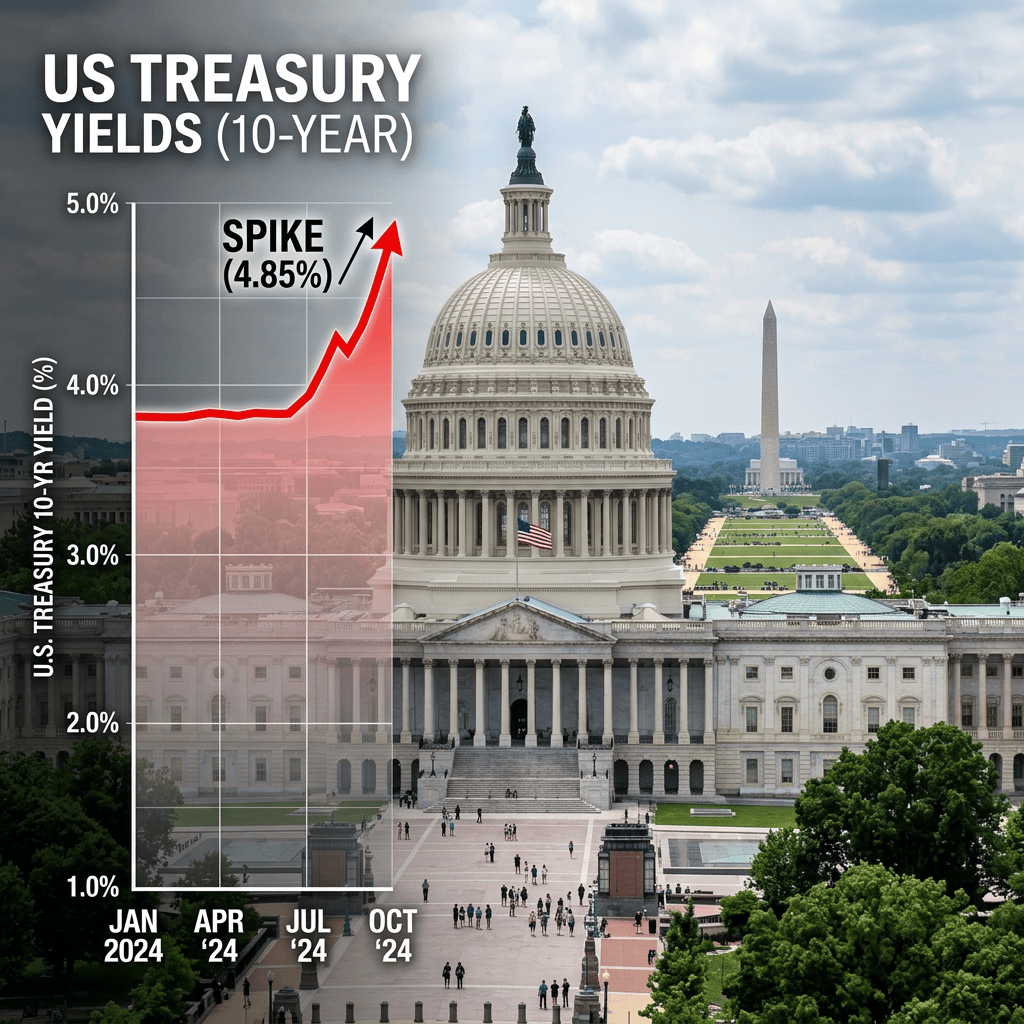
US Government Borrowing Costs Hit Highest Level Since 2007
US government borrowing costs have surged to their highest levels since the global financial crisis, with significant implications for the nation’s economy. This sharp rise has been largely attributed to escalating tensions surrounding the Iran war, which has raised fears that the Federal Reserve may be compelled to increase interest rates in an effort to stabilize the economy.
Understanding the Rise in Borrowing Costs
As geopolitical conflicts unfold, investors often react by reassessing their risk exposure. The Iran war has been a pivotal factor in causing concern among investors regarding the stability of markets. This uncertainty leads to heightened borrowing costs, as lenders demand higher premiums to offset the increased risk associated with financing government debt.
When borrowing costs rise, it translates directly into higher yields on government securities, such as Treasury bonds. The US Treasury 10-year yields have spiked to 4.85%, a notable increase that signals changing market conditions and investor sentiment. These fluctuations can significantly affect the overall fiscal landscape of the nation.
Implications for Fiscal Policy and the Economy
The implications of rising borrowing costs extend beyond the immediate financial markets; they influence various sectors across the economy. Higher government borrowing costs can lead to increased interest rates for consumer loans, mortgages, and other financial products. This potential tightening of credit may slow consumer spending and investment, which are crucial for economic growth.
Additionally, if the Federal Reserve decides to respond to the market pressures by raising interest rates, the ripple effects could amplify. An increase in rates might stabilize inflationary pressures but could also suppress economic activity. As businesses and consumers face higher borrowing costs, discretionary spending may decline, leading to slower economic growth.
Market Reactions to Geopolitical Events
In the coming weeks, market analysts will closely monitor how geopolitical events like the Iran war and the Federal Reserve’s monetary policy decisions play out. The reactions of investors and financial markets will be critical in determining the course of economic recovery and growth moving forward.
As uncertainty looms, understanding these dynamics becomes essential for stakeholders across the economy. From policymakers to consumers, the decisions made in light of rising borrowing costs will have far-reaching consequences for the national debt, fiscal policy, and overall economic stability.
Read more via Telegraph (UK)
 Media Air Base LLC
Leave a comment