Heathrow can add 15p per passenger to fund £3bn runway expansion
Posted July 29, 2026 11:28AM ET
The Civil Aviation Authority is stirring up a fresh controversy with airlines after its recent ruling that allows Europe’s busiest airport to recover £320 million in early development costs starting in 2028. This decision has raised eyebrows among industry stakeholders and could impact the broader landscape of airline operations and airport funding in the region.
As airlines grapple with the implications of this ruling, the financial dynamics between airports and carriers may shift significantly, raising concerns about increased costs for travelers. With the aviation sector striving for recovery post-pandemic, this ruling could introduce additional challenges, potentially fueling debates around airport funding models and profitability.
Stay tuned as we track the developments of this situation and its potential impact on air travel across Europe.
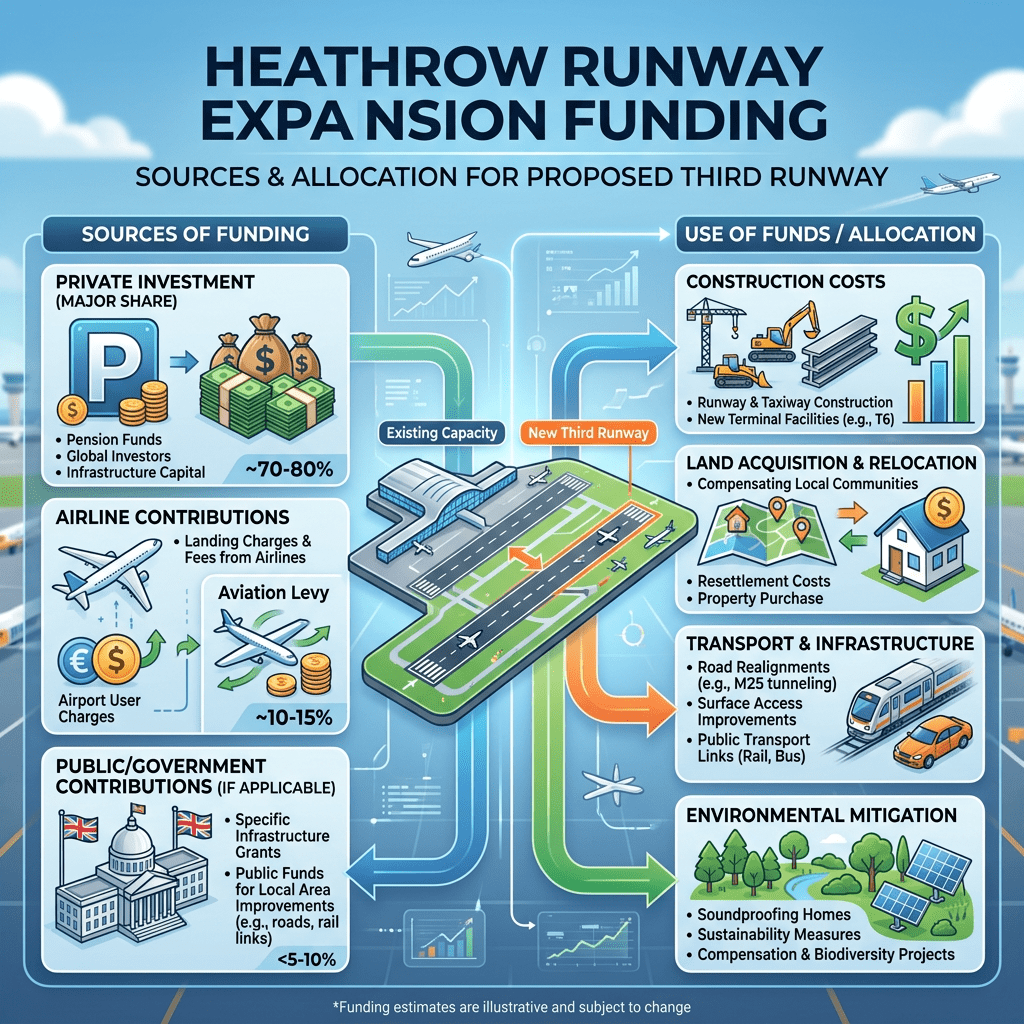
Heathrow Airport’s Funding Controversy: A Look at the Civil Aviation Authority’s Recent Ruling
The debate surrounding the expansion of Heathrow Airport, known as Europe’s busiest airport, has entered a new chapter following a significant ruling by the Civil Aviation Authority (CAA). This decision allows Heathrow to recover £320 million in early development costs starting in 2028, leading to a renewed conflict between the airport and several airlines that operate there.
Background on the Expansion Plans
Heathrow Airport’s proposed third runway aims to address increasing air traffic demand and enhance capacity. The expansion is projected to cost approximately £3 billion, and recent regulations permit Heathrow to impose an additional charge of 15p per passenger to help fund this massive project. This charge is intended to help offset the substantial early development costs that the airport has already incurred in planning and preparing for the expansion.
The Civil Aviation Authority’s Ruling
The CAA’s ruling permitting Heathrow to recover its early development costs is at the heart of the dispute. By allowing this recovery, the CAA seeks to provide regulatory clarity and establish a financial framework for the expansion. However, this has stirred criticism from airlines that oppose the imposition of new costs, arguing that it could lead to higher ticket prices for passengers.
Airlines’ Concerns
Airlines have raised concerns about the financial implications of the CAA’s ruling. They argue that the additional 15p charge per passenger, alongside the recovery of £320 million in early development costs, could discourage travel and place an unfair financial burden on both airlines and consumers. Airlines contend that any additional costs are likely to be passed on to passengers, potentially leading to a significant increase in airfares.
Implications for Passengers and the Aviation Industry
The monetary implications of the CAA’s decision could reverberate through the aviation industry, affecting not just airline profitability but also passenger choices. The planned runway expansion is seen as essential in maintaining Heathrow’s competitive edge in the international aviation market. However, this development must be balanced with the economic realities facing airlines and the potential for increased costs to translate into higher ticket prices for the average traveler.
Conclusion
As the situation unfolds, the clash between Heathrow Airport and the airlines will likely continue. The CAA’s decision to allow Heathrow to recover early development costs has sparked a renewed debate about the future of air travel in Europe. The expansion of Heathrow Airport remains a contentious issue, and finding a resolution that benefits all stakeholders—airlines, airports, and passengers—will be crucial as the aviation industry navigates its recovery and growth in the coming years.
With the airport’s ambitious plans on the horizon, it remains to be seen how all parties will balance the needs for expansion against the financial burden on travelers.
Read more via The Times (UK)
 Media Air Base LLC
Leave a comment