A Friday Economic Panic Attack
Are a bad jobs report and rising oil prices signals of trouble ahead?
March 6, 2026 5:59 pm ET
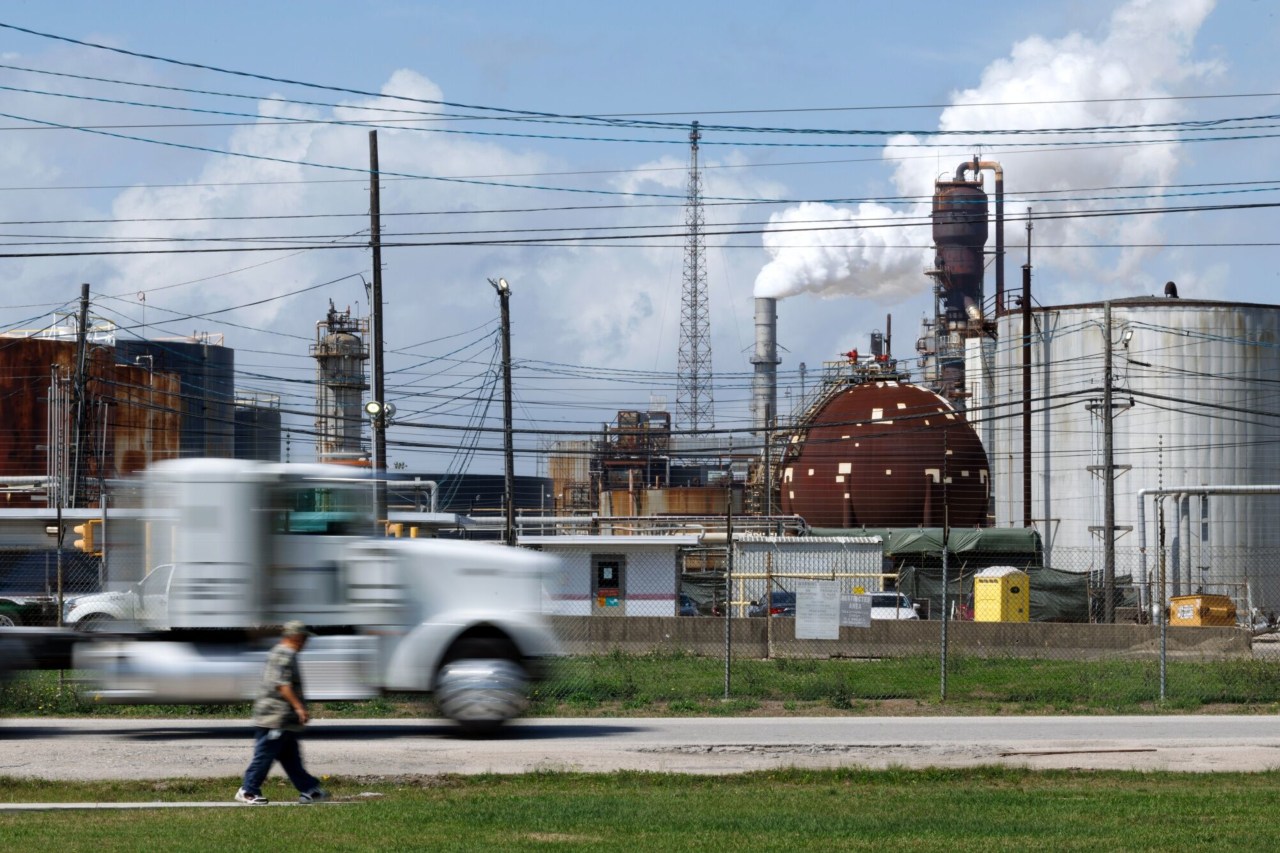
The Exxon oil refinery in Baytown, Texas, March 5. Mark Felix/Bloomberg News
Washington’s pessimist caucus is always on duty and the members had a good Friday, as oil prices climbed and the Labor Department said the economy lost jobs in February. Equities fell again on the bad news, but none of this is a cause for a panic attack.
There’s no denying the February report was lousy. The U.S. shed 92,000 jobs and revised down gains for January and December by a combined 69,000. The question is what to make of the declines.
The first point to understand is that the jobs report is unrelated to the Iran war, though Democrats want to link the two. The Labor household and employer surveys took place mid-month before the bombing began.
Opinion: Potomac Watch
Trump Fires Kristi Noem / The Iran War and U.S. Munition StocksSubscribeAdd to Queue
Some 28,000 of the job losses came in healthcare, but that owes largely to union labor actions. Other industries that shed jobs include leisure and hospitality (27,000), manufacturing (12,000), construction (11,000) and motion picture production (9,500). The monthly job data has been noisy lately, and the household survey was less gloomy.
That survey showed the number of workers employed part-time for economic reasons declined by some one million over the past two months, and the unemployment rate has remained more or less steady at 4.4%—around what it was in 2017. The ADP payroll report and the Institute for Supply Management’s services report this week both showed job growth last month, so go figure.
The labor market has been cooling, with healthcare and social assistance driving most gains. The causes are diffuse. Job growth notably stalled after President Trump began his tariff barrage last April, which created economic uncertainty and raised business costs. His immigration raids have reduced the supply of workers, especially in construction.
Many employers say that an aging population and skills gaps make it hard to find workers in the trades. Rising productivity—2.8% in the last year—may also mean employers need fewer workers and could explain why wage growth has remained strong despite a slowdown in hiring. Average hourly wages rose 0.4% last month and are up 3.8% in the past year.
As for the other cause of Friday’s anxiety, crude oil prices took a big jump to above $93 a barrel. The cause is shipping disruptions through the Strait of Hormuz from the fighting in the Persian Gulf region. Kuwait said that it may have to throttle production as its oil storage facilities fill up, and other producers may also do so temporarily. Qatar, which wants the war to end fast, fed the angst by saying prices could go to $150 a barrel.
Prices will rise further the longer the conflict continues, and Americans will see higher gasoline prices at the pump for a while. But to put current prices in non-panicky perspective, Brent crude traded above $90 a barrel for most of 2022 after Russia’s Ukraine invasion and exceeded $100 a barrel from 2011 to 2014. Neither price surge led to a recession.
Prices will come down assuming shipping bottlenecks ease. The threat level in the Persian Gulf has already declined somewhat with fewer Iranian missile and drone attacks, and Mr. Trump has said the U.S. Navy will escort oil tankers if necessary.
Stopping the flow of oil is part of the Iran regime’s war strategy to cause enough political pain in the Gulf and the U.S. that Mr. Trump and Israel stop the bombing. But that is all the more reason not to panic at a temporary price surge and press ahead to remove Iran’s missile and drone stockpiles and assembly lines and the regime’s brutal enforcers.
Oh, and if Mr. Trump wants a tax-cut boost for the economy while the war continues, he could call off his new 15% universal tariff. Consider it our contribution to easing everyone’s economic anxiety.

Copyright ©2026 Dow Jones & Company, Inc. All Rights Reserved.
Appeared in the March 7, 2026, print edition as ‘A Friday Economic Panic Attack’.
The Editorial Board speaks for free markets and free people, the principles, if you will, marked in the watershed year of 1776 by Thomas Jefferson’s Declaration of Independence and Adam Smith’s “Wealth of Nations.” So over the past century and into the next, the Journal stands for free trade.
View this Wall Street Journal article CLICK HERE
 Media Air Base, LLC
Leave a comment