Tariff refund checks? Maybe not. But consumers could get money back.
USA TODAY
Since the U.S. Supreme Court struck down many of President Donald Trump’s import tariffs in a Feb. 20 ruling, talk of refunds has echoed across the country.
Those tariffs equated to a tax increase of roughly $1,000 per American household in 2025, according to a Feb. 23 report from the nonpartisan Tax Foundation.
Now, can consumers expect to get most of that money back?
We asked several tariff experts, and the answer was a resounding “No.”
Here’s the problem: However much those tariffs cost American households, consumers didn’t pay the taxes themselves. Importers paid them. Many parties ultimately absorbed their cost, including exporters, importers, wholesalers, retailers and, yes, consumers. USA TODAY Shopping: Shop sales in tech, home, fashion, beauty & more curated by our editors.
“Consumers have no legal claim to a refund, because they weren’t the importers,” said Stephen Kates, financial analyst at Bankrate. “They just bought the products.”
But American retailers may still find ways to return some of the massive tariff refund to their customers, if and when it arrives.
Companies are lining up for tariff refunds
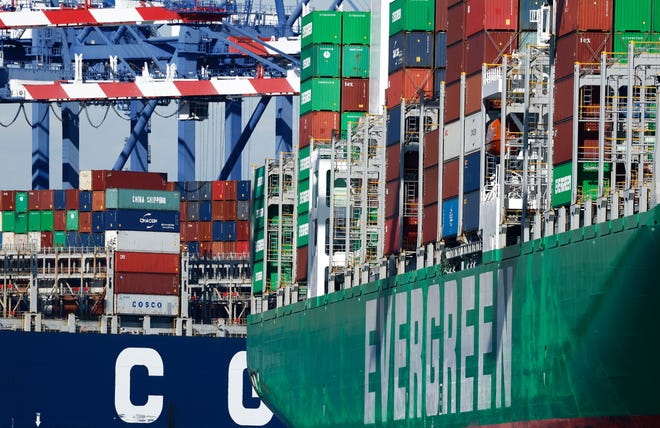
Americans are talking about tariff refunds because American companies are lining up to collect them. On Feb. 23, the delivery giant FedEx filed a lawsuit seeking a refund of the tariffs it paid under policies struck down by the high court.
That suit followed the Supreme Court ruling. In the months before the decision, thousands of other companies sued to recoup their share of the estimated $175 billion in import taxes the federal government has collected.
Government officials responded in court filings that they would proceed with refunds if the tariffs were struck down.
Now, observers expect a deluge of new lawsuits in response to the Supreme Court ruling. The refund process “is likely to be a ‘mess,’” Justice Brett Kavanaugh wrote in a dissent.
“It doesn’t appear that the Trump administration is going to expedite that process,” said Alex Jacquez, chief of policy and advocacy at the progressive Groundwork Collaborative. “The mechanics of getting that money back to consumers is even more complicated.”
But for the companies that paid the tariffs, at least, there is a paper trail.
“Refunds for overpayments will go to the persons or the entities that legally made the payment, just like any other tax refund,” said Erica York, vice president of federal tax policy at the Tax Foundation. “The government has these records.”
Tariff refunds to consumers? An ‘infinitesimal’ chance.
Congress could also send tariff refund checks to consumers, who paid the taxes indirectly when they purchased higher-priced products. But that process would be far messier, tariff experts said.
“There is an infinitesimal chance that that could happen,” said Kates of Bankrate.
“You think of a company like Costco,” he said. “How many millions of people have bought these products over the last year? There’s no way to logistically imagine such an operation to return five bucks, 10 bucks, to 10 million families. Impossible.”
Trump administration officials seem to agree.
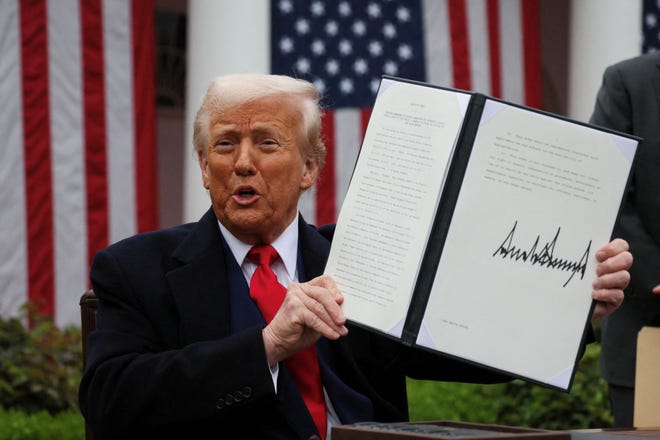
In remarks at the Economic Club of Dallas shortly after the Supreme Court ruling, Treasury Secretary Scott Bessent predicted any tariff refunds aren’t likely to reach consumers: “I got a feeling the American people won’t see it,” he said.
Retailers could offer voluntary tariff rebates
There might be another way.
Some tariff observers predict retailers will launch a voluntary movement to return tariff costs to their customers.
“Companies announced tariff increases to consumers,” said Scott Lincicome, an economist at the libertarian Cato Institute. “There were thousands and thousands of these emails sent out last year. Lots of small businesses, but larger businesses as well.”
If tariff refunds go out to corporate America, Lincicome said, it isn’t hard to imagine companies would return some of the funds to their customers, whether through tariff rebate sales, retail credits or even “a check in the mail for the price increase that they imposed,” he said.
Retailers might offer tariff refunds under pressure, Lincicome said, from customers armed with old emails about tariff-driven price increases or tariff surcharges on sales receipts.
“I think some companies are going to have really upset customers who are going to basically demand it: ‘You charged me an extra 50 bucks. Where’s my money?’” Lincicome said.
Leading Democrats, including California Gov. Gavin Newsom and Illinois Gov. JB Pritzker, have called for the Trump administration to issue tariff refunds to American households in response to the court ruling. Pritzker demanded $1,700 for every family in his state.
And what of those $2,000 tariff dividend checks?
Those demands play on the much-touted $2,000 tariff dividend checks that Trump repeatedly pledged to American families in 2025.
The idea behind tariff rebates was to pass along some of the revenue from Trump’s import taxes to low- and middle-income Americans.
Independent analyses cast doubt that there was ever enough tariff revenue to cover $2,000 dividend checks. In light of the Supreme Court ruling, tariff experts say any tariff payout to American consumers, refund or rebate, is unlikely.
“Tariff rebate checks weren’t going to happen and are still not going to happen,” said York of the Tax Foundation.
Tariff rebates would require an act of Congress, much like the fiscal stimulus payments Congress authorized during the COVID-19 pandemic.
Congressional approval for tariff dividend checks “was never very likely,” said Kates of Bankrate. After the Supreme Court ruling, he said “whatever miniscule chance that this could go through Congress is effectively gone.”
Contributing: Bart Jansen, Reuters
View this USA Today article CLICK HERE
 Media Air Base, LLC
Leave a comment