Activist pushes London Stock Exchange for £5bn share buyback
With LSEG’s stock hit by fears over impact of AI on FTSE tech companies, Elliott Advisors seeks boost to shareholder returns
Jill Treanor, City Editor
Saturday February 14 2026, 2.00pm GMT, The Sunday Times

The feared activist investor that has amassed a secret stake in the London Stock Exchange Group is urging the FTSE 100 business to embark on a £5 billion share buyback to boost returns for its embattled shareholders.
Elliott Advisors has built a multibillion-pound position in LSEG, which owns the stock exchange, and has set out proposals for chief executive David Schwimmer, who is under pressure following a near-40 per cent slump in its share price in the last 12 months.
The company, which is valued at £37 billion, has been roiled by concerns over the impact of artificial intelligence on technology-focused businesses. The share prices of other FTSE 100 companies, such as publisher Relx and software business Sage, have been hit by fears that AI will cannibalise their technology.
• Relx says it is inconceivable that AI can replicate its business
Elliott, according to people familiar with the situation, believes LSEG’s rout has been overdone and that the business can take steps to boost its returns to shareholders.
Its feeling that LSEG is undervalued is based on an analysis of its rivals, many of which are listed in the US. It is thought that Elliott believes LSEG should observe whether London-quoted companies could achieve a higher valuation if they switched their listing to New York, but it is not seeking an imminent delisting of LSEG from London, which would prove deeply controversial.
The business editor’s exclusive analysis of all the latest financial and economic news. Sign up with one click
LSEG bought back £2.5 billion worth of its shares last year and Elliott reckons it has capacity to take advantage of the fall in the share price and double the size of buybacks. Elliott also thinks that LSEG has the potential to boost its margins — its operating profit as a percentage of its revenue — from 37 per cent, which is lower than its rivals.
It feels, too, that LSEG could provide more detail on the impact of AI on its business — information that would assuage investor concerns — and set out targets for when new projects will be rolled out.
Elliott is known for its detailed analysis of companies and for taking multibillion-pound positions that are not immediately easy to spot because they are built through complex transactions or kept below the 5 per cent threshold at which they must be disclosed. It owns £3.8 billion worth of shares in FTSE 100 oil giant BP — equivalent to a 5 per cent stake — but appears to own less than this in LSEG as no disclosure has been made.
• BP suspends share buybacks to prioritise cutting debt
Schwimmer has transformed LSEG since becoming chief executive in 2018, after 20 years at Goldman Sachs, through the £22 billion acquisition of data and analytics business Refinitiv. LSEG is now competing with New York-listed businesses such as Moody’s and Standard & Poor’s and its share price rocketed from about £44 to a peak of over £112 in January last year. Amid the AI fears, the shares are now trading at £75.
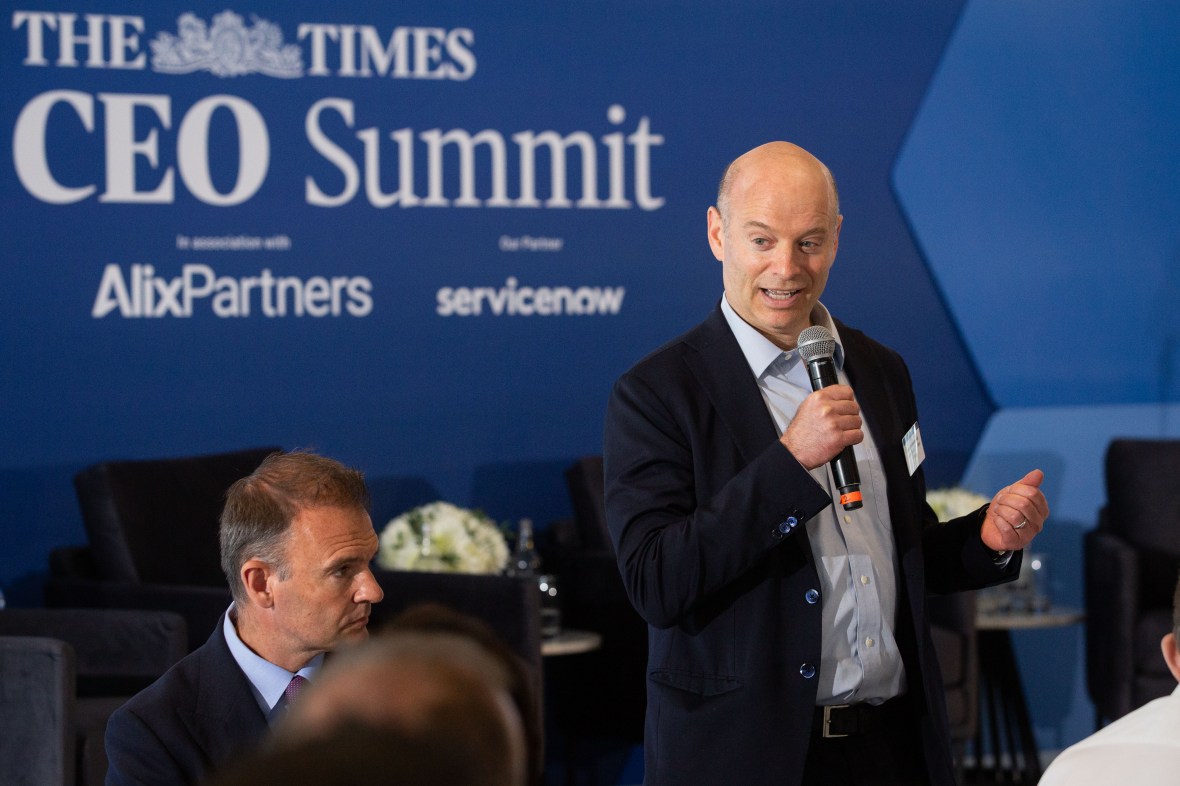
LSEG’s share price soared under David Schwimmer, but AI concerns have reversed that momentum
JOSHUA BRATT FOR THE TIMES
• Alistair Osborne: LSEG boss David Schwimmer fighting against the tide
The data business makes up two thirds of LSEG’s revenue, with the remaining third coming from its markets operations, which include the London Stock Exchange and LCH Clearing Services. It also owns a stake in the New York-listed bond-trading business Tradeweb, a shareholding that is valued at £10 billion.
According to people familiar with the situation, Elliott believes this conglomerate-style structure is the reason for its view that LSEG’s assets are undervalued. This could pave the way for asset sales to pay for further buybacks. A sell-off of the stock exchange itself is not regarded as an option as it produces only about 4 per cent of total revenues.
Elliott supports the current management team but wants bosses to improve financial communications and set out how LSEG is insulated from AI. The group signed a ten-year relationship with Microsoft in 2022 to put its data in the cloud and also has partnerships with AI firms such as Anthropic to allow LSEG customers with a licence to access or analyse its data.
The activist investor would not comment, while the London Stock Exchange Group said: “LSEG maintains an active and open dialogue with our investors, while remaining focused on executing our strategy.”
Schwimmer is expected to address some of the points raised by Elliott when he presents the company’s full-year results next Thursday. In October, he had spelt out that much of the group’s data is proprietary, which was regarded as an attempt to fight back against the threat of AI. Elliott’s presence on the LSE share register was first revealed by the Financial Times last week.
View this The Times (UK) article CLICK HERE
 Media Air Base, LLC
Leave a comment