Student loan borrowers won’t see wage garnishments – for now
USA TODAY
Updated Jan. 16, 2026, 5:16 p.m. ET
How many student loan borrowers are in default in the U.S.?
How long is the Department of Education pausing wage garnishments?
How many student loan borrowers are in default in the U.S.?
How do student loan defaults affect mortgage eligibility?
Is US nuclear missile upgrade a liability or asset?
Student loan borrowers in default are saved from wage garnishments — for now.
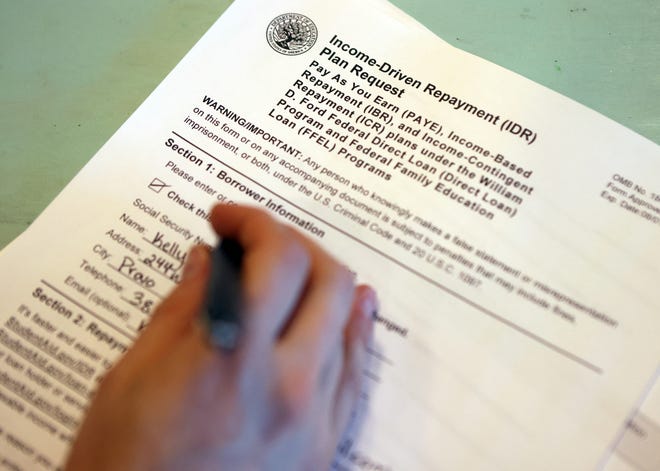
The Department of Education said it’s pausing plans to garnish wages and other income like tax refunds of student loan borrowers who are in default. The department had planned to begin wage garnishments the week of Jan. 7.
The temporary halt will allow the department to “implement major student loan repayment reforms” such as simplifying repayment options and providing an additional opportunity for borrowers to rehabilitate their federal student loans, the department said in a release.
No time frame was given as to how long the pause will last, but it gives financially strained borrowers time to resolve their defaulted loans with their federal loan servicer, the department said.
“The Department determined that involuntary collection efforts such as Administrative Wage Garnishment and the Treasury Offset Program will function more efficiently and fairly after the Trump Administration implements significant improvements to our broken student loan system,” said Under Secretary of Education Nicholas Kent. USA TODAY Shopping: Shop sales in tech, home, fashion, beauty & more curated by our editors.
Credit scores still at risk
Although borrowers will get to hold on to their income a bit longer, the department warned that defaults will still be reported to credit agencies.
“The Department reports student loan defaults to credit reporting agencies, which may adversely impact borrower credit reports,” it said. Lower credit scores have lasting effects. Lenders use them to decide whether to approve loans and credit cards and to determine interest rates and credit limits.
“People are most upset when they want to get a house,” Michele Raneri, vice president and head of U.S. research and consulting at TransUnion, told USA TODAY late last year. “They saved some money, did their research, finally found one within budget, but when they go to get a mortgage, they find out their score’s too low. That’s something that will take a while to bring back up, so it’s a missed opportunity.”
How many Americans are in default?
More than 4 million Americans were technically in default, or at least 270 days overdue, on their student loans as of the end of 2025, Raneri said. They just hadn’t been reported to the credit bureaus yet for various reasons, including processing lags, she said.
When they’re finally reported, almost 10 million borrowers, or almost 25% of the federal student loan portfolio, could be in default, the Department of Education said. That would be a record, experts said.
Mixed reactions
The pause is a win for struggling borrowers, said Aissa Canchola Bañez, policy director at Protect Borrowers, which has been fighting to get the Trump administration to pump the brakes on wage garnishment. It estimated a borrower defaulted on a loan every nine second, “marking an unprecedented default crisis three times worse than prior to the pandemic.”
Get the Daily Briefing newsletter in your inbox.
The day’s top stories, from sports to movies to politics to world events.
Delivery: Daily Your Email
“Amidst the growing affordability crisis, the Administration’s plans would have been economically reckless and would have risked pushing nearly 9 million defaulted borrowers even further into debt,” Canchola Bañez said.
Some advocates said the administration needs to go further. “While this is a welcome first step, this is only a temporary pause,” said Natalia Abrams, Student Debt Crisis Center president & founder. “The Department of Education must offer comprehensive student loan debt relief and agree to stop all collections practices moving forward. No one should ever face the possibility of having their hard-earned wages or tax refunds taken away from them.”
However, some analysts said the halt is a loss for the country and its budget.
The move is “beyond ridiculous,” said Maya MacGuineas, president of the nonprofit Committee for a Responsible Federal Budget (CRFB). “Not only will it increase costs to the taxpayer, but it will also actually worsen affordability challenges by allowing student loan burdens to balloon and putting upward pressure on interest rates and inflation.”
CRFB estimates the U.S. could lose up to $5 billion per year in collection and lead loan balances to balloon.
“Loans are supposed to be repaid, and the Administration should start collecting,” MacGuineas said.
Medora Lee is a money, markets and personal finance reporter at USA TODAY. You can reach her at mjlee@usatoday.com and subscribe to our free Daily Money newsletter for personal finance tips and business news every Monday through Friday morning.
View this USA Today article CLICK HERE
 Media Air Base, LLC
Leave a comment