The New China Trade Shock Is Just Beginning
January 19, 2026 at 3:00 PM EST

By Daniel Moss
Daniel Moss is a Bloomberg Opinion columnist covering Asian economies. Previously, he was executive editor for economics at Bloomberg News.
In this Article
Provide news feedback or report an error
Takeaways by Bloomberg AIHide
- China’s export machine is still thriving despite US tariffs, with a record trade surplus exceeding $1 trillion last year.
- The country’s sales to the US plunged in December, but shipments to Southeast Asia, the European Union, and the UK increased, with China’s share of exports to the US falling to a historic low of 11% last year.
- China’s economy is struggling with deflation in large swathes, and while trade is projected to expand this year, it’s expected to do so at a slower clip, with the importance of demand abroad underscored by recent economic figures.
The good news for China is that its export machine is still very much a going concern. It might even be described as thriving, despite US tariffs. Just as well, given domestic conditions reveal an economy struggling for traction. Growth in fourth quarter was the slackest since the re opening from Covid in 2022.
Still, the trade surplus last year exceeded $1 trillion, a record amount that’s rich with implications. Measured by China’s unabated dispatch of goods across the world, globalization hasn’t been undone by the levies imposed by the White House. It keeps absorbing setbacks, as does the world economy. That’s a relief given the host of dire predictions that accompanied the imposition of duties in April.BloombergOpinion
- Powell’s Best Efforts Can’t Save the Fed’s Independence
- Ignore Gold’s Message At Your Peril
- The Maritime Shipping Industry Is Finally Returning to Normal
- Bank of England Is Ramping Up the Pressure on Hedge Funds
President Donald Trump keeps testing the system’s durability, though. On the weekend, he pledged tariffs against European nations that oppose his insistence that he acquire Greenland, one way or another, from Denmark.
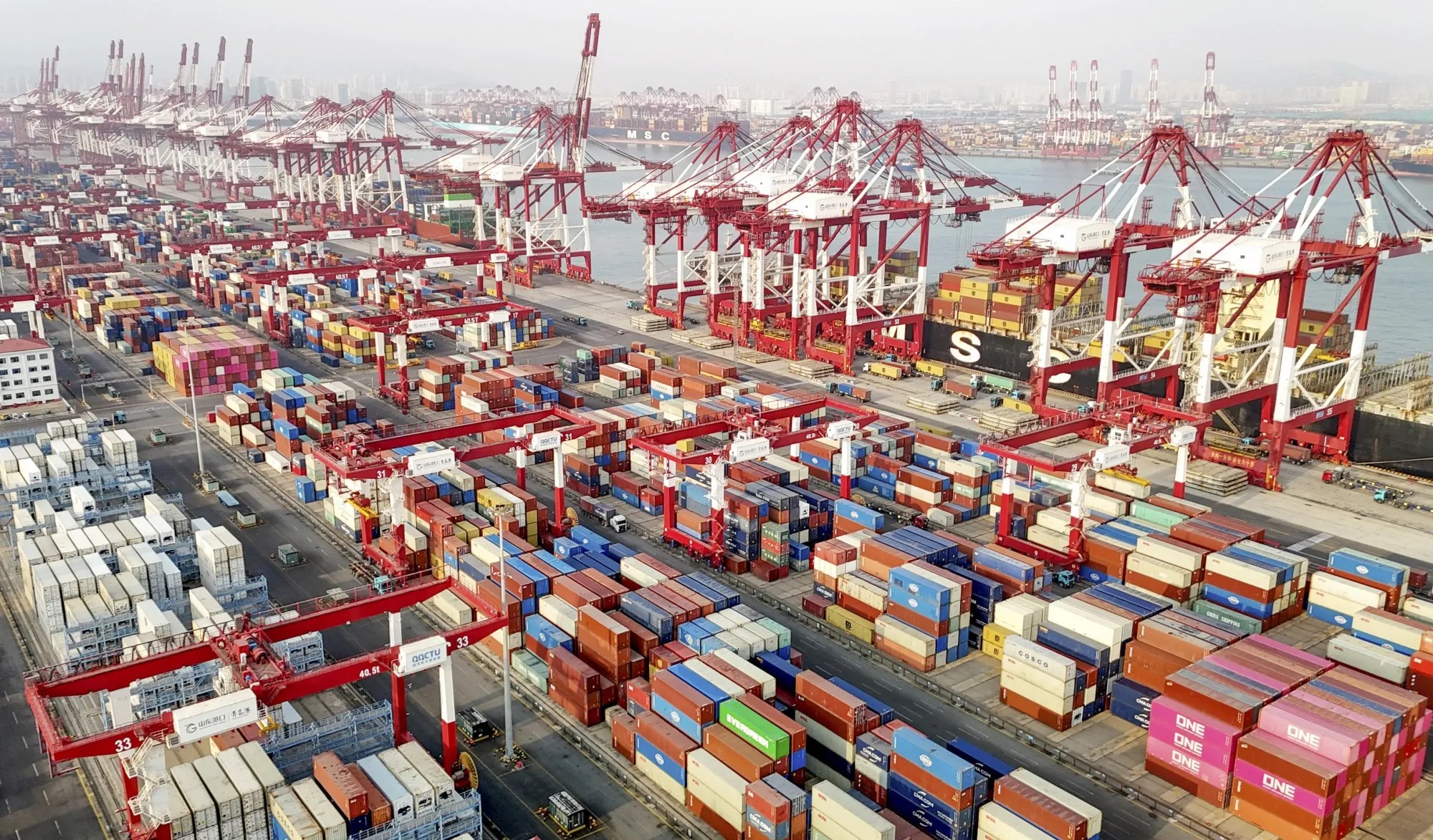
Few have escaped Trump 2.0 completely unscathed. While trade will expand this year, it’s projected to do so at a slower clip. And patterns are evolving, some of them in ways bound to create new dislocations. China’s sales to the US plunged in December; America’s share of total exports fell to a historic low of 11% last year. If the largest consumer market has waned considerably, where do all these products churned out by factories go? Shipments to Southeast Asia jumped 13%, to the European Union by 8%, and the UK by a similar magnitude.
China’s Trade Surplus Defied Tariffs to Hit a Record
Exports found alternative markets as US customers balked
Source: China’s General Administration of Customs
That’s encouraging on one level. We aren’t enduring a repeat of the 1930s, when barriers went up almost everywhere. With the exception of China, few places have fought back against Washington. “This asymmetry matters,” Alan Taylor, a professor at Columbia University and member of the Bank of England’s interest-rate setting panel, said in a speech in Singapore last week. “Just as water finds a level, trade tends to find a way. If one path is blocked, arbitrage of goods and services will seek out the next best alternative.”
This optimism comes with caveats. Large swathes of China’s economy are suffering from deflation. The price of exports making their way to other destinations have fallen accordingly. The alternative markets like France and Germany propping up Beijing’s model may find it all too tempting to start fighting back. Electric cars are vulnerable. The EU has applied tariffs, though is considering replacing them with minimum prices, a step that would ease tensions with China. Britain, for now, remains more open. BYD Co., the Shenzhen-based vehicle maker facing a tough domestic environment, posted a more than five-fold increase in sales to the UK in 2025.
The importance of demand abroad was underscored by a raft of figures released on Monday. Gross domestic product expanded 4.5% in the fourth quarter from a year earlier, retail sales disappointed and investment stumbled. The economy met President Xi Jinping’s annual growth target of about 5%, but only just. Authorities are still wary of launching the massive stimulus that other large economies confronting the same conditions would undertake.
So, the export juggernaut has primacy. Beijing is unlikely to countenance a major appreciation of the yuan even as appetite for the greenback has soured. The yuan did advance around 5% in the past year, though that was a far more modest appreciation than that recorded by the Malaysian ringgit, Thai baht and Singapore dollar. A plausible reason for holding back on juicing the economy is that rate cuts tend to weigh on a currency. Many economists anticipate only an incremental easing this year, if any.
It’s also important not to pin too much on China, or on policy in Washington. Offering consolation to his audience in Singapore, Taylor tried to step back from the current noise and look at globalization through a historical lens. Yes, government actions matter greatly. But so do technological breakthroughs. The cost and speed of moving freight has retreated, in fits and starts, since the middle of the 19th century. Nodding over his shoulder to the city-state’s port — one of the world’s busiest — Taylor spoke of the changes bracketed by the arrival of the first mail steamship in Singapore, the Lady Mary Wood, in 1845, and the 2019 docking of the MSC Isabella, the largest ever container vessel.
The intervening years contained their share of retrograde developments, not to mention the tragedy of two world wars and countless regional conflagrations. At times, the greatest minds had reason to doubt that commerce could ever recover its pre-1913 vibrancy. For now, the resilience of trade is one big thing the world economy has working in its favor. May the price of this China shock not become too high.
More From Bloomberg Opinion:
- South Korea Is Right to Worry About a Weakening Won: Daniel Moss
- China’s New Growth Strategy Needs a Reality Check: Juliana Liu
- America Is Missing the Real Problem in Greenland: Lara Williams
Want more Bloomberg Opinion? OPIN <GO>. Or you can subscribe to our daily newsletter.
This column reflects the personal views of the author and does not necessarily reflect the opinion of the editorial board or Bloomberg LP and its owners.
View this Bloomberg article CLICK HERE
 Media Air Base, LLC
Leave a comment