Stock futures slump as U.S.-Europe trade tensions ramp up over Trump’s Greenland demands
By Mike Murphy
Last Updated: Jan. 19, 2026 at 8:35 p.m. ET
First Published: Jan. 19, 2026 at 6:21 p.m. ET
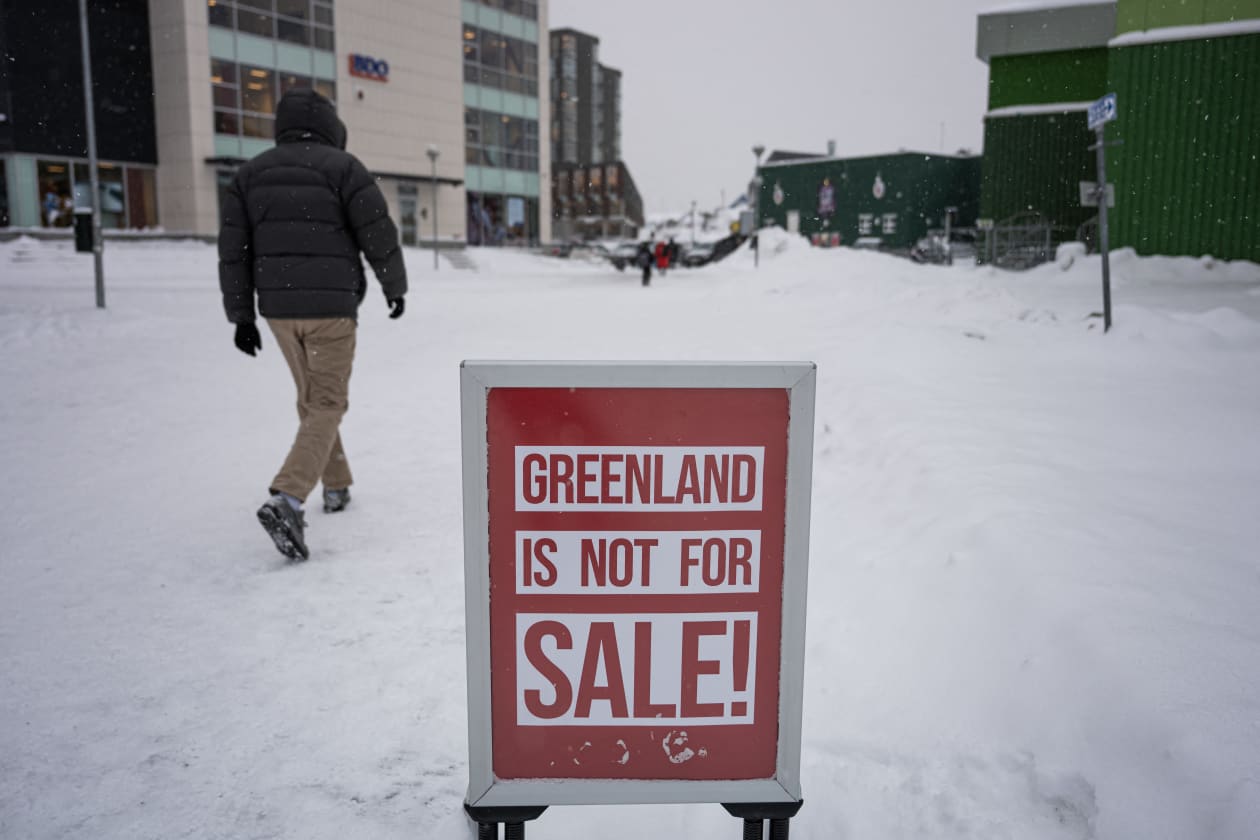
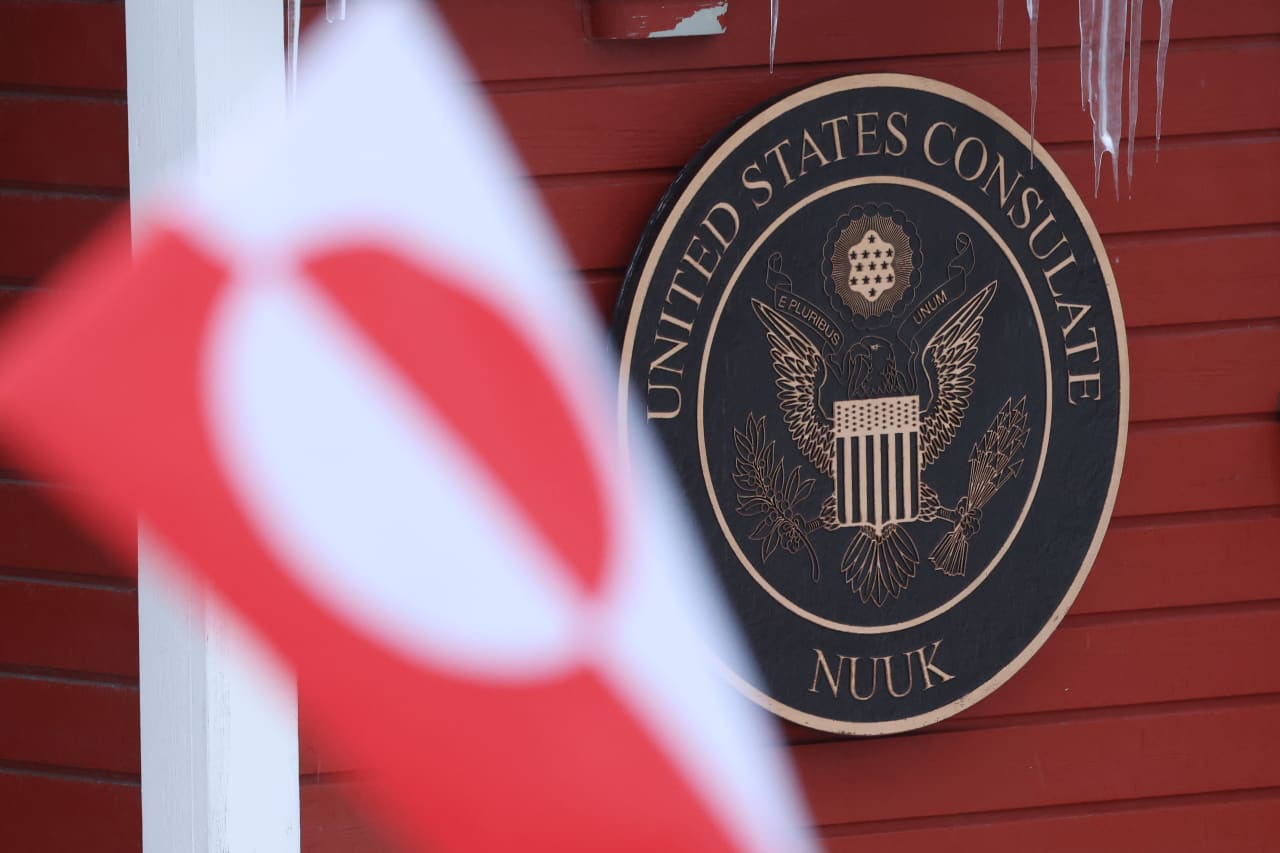
President Donald Trump vowed Monday to follow through with his tariff threats if Denmark doesn’t agree to sell Greenland to the U.S.Photo: AFP via Getty Images
Referenced Symbols
- YM00-1.46%
- ES00-1.55%
- NQ00-1.81%
- GC00+2.93%
- SI00+7.19%
- BTCUSD-2.34%
- CL.1-0.82%
- DJIA-0.17%
- SPX-0.06%
- COMP-0.06%
- EURUSD+0.62%
- DXY-0.83%
Wall Street braced for losses when regular trading resumes Tuesday, as U.S. stock futures fell over the holiday weekend following President Donald Trump’s latest tariff threats against Europe.
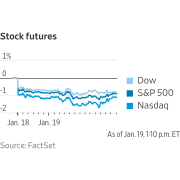
Dow Jones Industrial Average futures
YM00-1.46% were down more than 400 points, or 0.9%, late Monday. S&P 500 futures
ES00-1.55% were off 1% and Nasdaq-100 futures
NQ00-1.81% declined 1.1%
Perceived safe havens, such as gold and silver, continued their record-setting rally. Gold futures
GC00+2.93% rose above $4,670 an ounce for the first time, while silver
SI00+7.19% touched a new high above $94 an ounce.
Here’s why investors may want to look beyond U.S. markets See All Videos
Bitcoin
BTCUSD-2.34% slid more than 3% over the past 24 hours and was recently trading below $93,000. West Texas Intermediate crude futures
CL.1-0.82%, the U.S. benchmark, rose slightly.
U.S. stock and bond markets were closed Monday for the Martin Luther King Jr. Day holiday. Stocks closed lower Friday, and all three major indexes finished lower for the second straight week, as the Dow
DJIA-0.17% slipped 0.3%, the S&P 500
SPX-0.06% declined 0.4% and the Nasdaq
COMP-0.06% dropped 0.7%.
On Saturday, Trump announced 10% tariffs on imports from eight European countries, including Denmark, the U.K., France and Germany, effective Feb. 1, as he ramped up pressure for Denmark to sell Greenland to the U.S. He said those tariffs would rise to 25% on June 1 if a Greenland deal has not been reached by then. Last summer, Trump announced a trade deal imposing 15% tariffs on most European goods, averting a trade war; the E.U. has yet to ratify that deal.
Trump’s push for Greenland has rattled European countries, and experts have warned it could fracture NATO. The European Union is reportedly considering reviving $93 billion in retaliatory tariffs against the U.S., or activating a “trade bazooka” allowing the E.U. to take collective defense against economic coercion. But by and large, European countries appear to be hoping the issue gets resolved through diplomacy rather than through further escalation.
The Wall Street Journal reported Monday that Trump told Norway’s prime minister that since he feels he was snubbed for the Nobel Peace Price, “I no longer feel an obligation to think purely of Peace,” adding that he said Trump told him the world won’t be secure until the U.S. has “complete and total control” of Greenland.
Denmark, historically a staunch U.S. ally, has flatly rejected turning Greenland over to the U.S.
In an NBC News interview Monday, Trump refused to comment on whether he’d consider using military force to take Greenland, and vowed he would “100%” follow through with his latest tariff threats.
This week, Trump will attend the World Economic Forum in Davos, Switzerland, along with many European leaders, leading to concern that his Greenland demands will “suck out all the oxygen” from the meeting and derail any possible Ukraine plans, Bloomberg News reported Monday.
Some analysts warn that the economic implications could go beyond Europe simply rethinking the “buy American” trade.
“The deeper fault line here is not trade flows. It is capital,” wrote Stephen Innes, managing partner at SPI Asset Management, in a Sunday note. “Europe is not just a trading partner of the United States; it is its largest financier. European institutions sit on a mountain of U.S. bonds and equities, a structural reality that has quietly funded America’s external deficits for years.”
“If Europe chooses to move beyond rhetoric and puts capital market measures on the table, even implicitly, the shock would dwarf anything tariffs could achieve,” Innes said. “Weaponizing capital flows would strike at the plumbing of global markets.”
The euro
EURUSD+0.62% rose 0.3% against the dollar in Monday’s European trading, while the ICE U.S. Dollar Index
DXY-0.83%, which compares the buck to a basket of rival currencies, slid 0.3%.
“The dollar is back on the defensive,” Karl Schamotta, chief market strategist at Corpay Cross-Border Solutions, said in a Monday note. But he downplayed fears that the E.U. would weaponize its U.S. Treasury bond holdings by selling off.
The “rhetoric is becoming overheated,” Schamotta wrote, noting that “any entity selling U.S. dollar-denominated assets into a politically-driven ‘fire sale’ would suffer a serious haircut as Treasury prices fall and yields climb… Any country initiating an attack could easily find its own economy brought to the brink of ruin.”
Partner Center
News For You
Global Stocks Retreat After Trump Tariff Threat
WSJ

U.S. Economy Can Grow 4%-5% in 2026, Says Bessent. But Voters Have ‘Inflation PTSD.’
Barron’s

Trump Links Greenland Threats to Missing Out on Nobel Prize
WSJ

Goldman Sachs Grapples With Top Lawyer’s Epstein Problem
WSJ

Why an Emboldened Trump Set His Sights on Greenland
WSJ

Europe Contends With a Big New Threat: the U.S.
WSJ
Go to WSJ+ Dashboard Explore WSJ+ Marketplace
About the Author

What to Read Next
Stock futures lead global markets sharply lower and gold hits fresh record as Trump threatens tariffs on Europe over Greenland
Trump’s latest E.U. tariff threats may spur more investors away from the ‘buy America’ trade, analysts say
Trump plans 10% tariffs on European countries over Greenland: What it means for markets.
View this MarketWatch article CLICK HERE
 Media Air Base, LLC
Leave a comment