Here’s all you need to know about new margin requirements
Last Updated: Jan. 14, 2026 at 12:26 p.m. ET
First Published: Jan. 14, 2026 at 10:12 a.m. ET
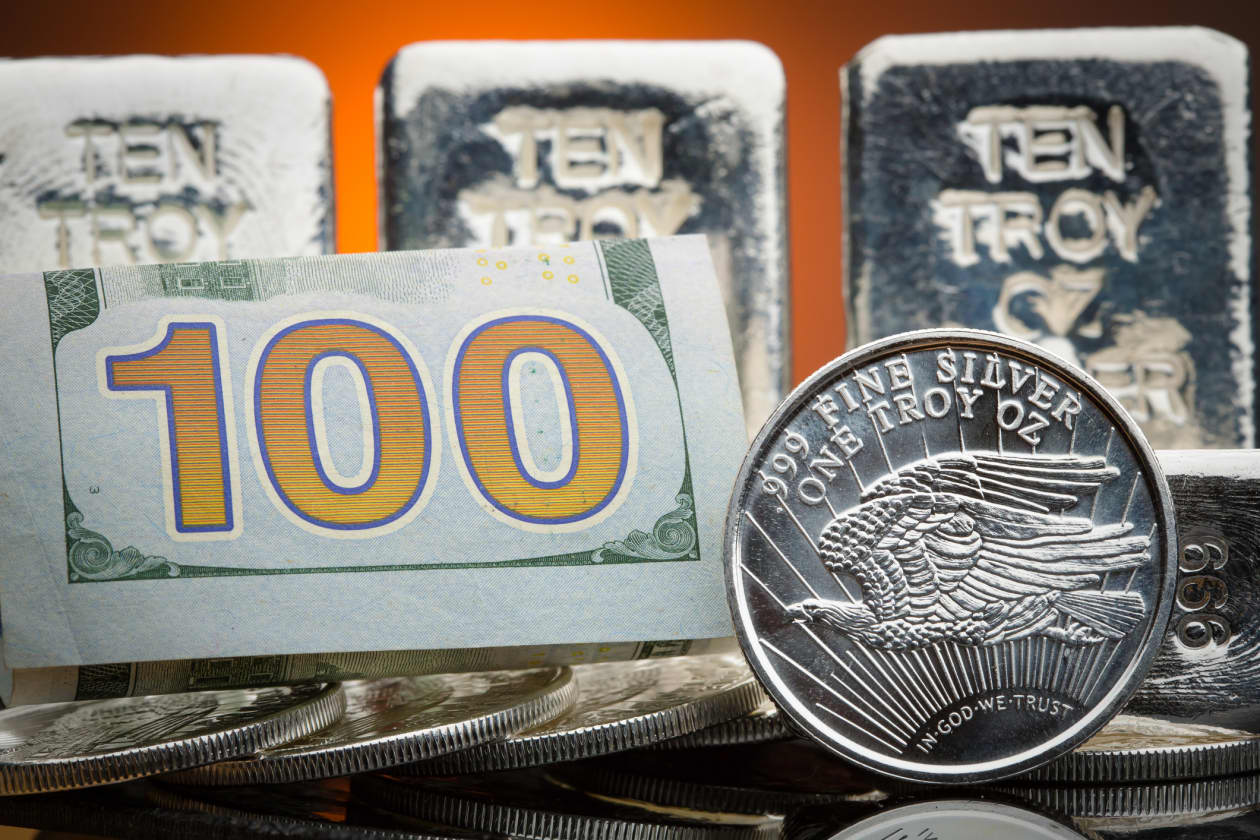
Why silver could top $100 an ounce within weeks. Photo: Getty Images/iStockphoto
Referenced Symbols
Key Points
About This Summary
- CME Group increased silver futures contract margin requirements three times since the beginning of December.
- Silver was surging Wednesday after settling at a record high of $86.34 an ounce a day before, up 30% year-to-date climb.
- CME plans to launch a smaller 100-ounce silver futures contract on February 9, pending regulatory review, to improve market accessibility.
Trading-exchange operator CME Group made it more expensive in recent weeks for people to trade silver futures contracts. That doesn’t seem to bother investors, who have lifted prices up to their highest levels on record, with many setting their sights on the psychologically important $100-an-ounce mark.
CME
CME+2.53% already raised its silver futures contract performance bond requirement, also known as margin, once in January after bumping it up twice in December. The margin requirement is currently at 9% of the contract’s notional value, up from around 7.2% in mid-December. Higher margins haven’t deterred investors, who instead have driven prices for the metal to fresh record highs.
“While higher margins increase the marginal cost of trading, they are unlikely to halt gains, especially as investors also push cash prices higher,” said Rob Haworth, senior investment-strategy director at U.S. Bank Asset Management.
CME describes margin as a “good-faith deposit to guarantee a market participant’s performance against potential future losses on open positions.” It’s a risk-management tool that helps to assess the overall portfolio risk to protect market participants and the market as a whole, according to CME, and is not meant to move a market one way or another.
“Prices for precious metals continue to climb as investors digest increasing geopolitical risk around Venezuela and Iran, with silver trying to keep pace with gains for other precious metals,” Haworth said.
On Comex, silver
surged to new highs Wednesday, trading at $91.44 an ounce after settling on Tuesday at a record, based on the most-active contract. Year to date, prices have already climbed by about 30%. Gold
was also on track to notch a fresh record-high close Wednesday, trading at $4,627.30.
Margin changes
Investors who have been buying silver with the expectation that prices will rise have built up a lot of equity in their margin accounts, “thanks to these dramatic silver price gains,” said Stefan Gleason, president and chief executive officer at Money Metals Exchange.
That makes meeting “higher effective margin rates less of a challenge,” he said.
When asked why CME raised the margin requirements, CME spokeswoman Laurie Bischel said that very high volatility and price appreciation in metals markets since the end of 2025 required fixed margin levels to be adjusted more frequently.
Separately, CME said that as of the close of business Jan. 13, margins on silver, along with gold, platinum and palladium, would be based on a “percentage of notional” value, instead of being based on a dollar amount.
The change means that margins will now rise or fall automatically depending on how big the futures contract is in dollar terms, said Nate Miller, vice president of product development at Amplify ETFs, which offers the Amplify Junior Silver Miners exchange-traded fund
A trader’s required collateral scales with the total value of the underlying silver the contract represents, rather than being a static dollar amount, he said. “If silver prices jump, the amount you must put up increases, helping the exchange manage risk more smoothly during big swings.”
Bischel told MarketWatch that the change to a percentage-based margin is “intended to make it easier for market participants to better forecast margin costs as a contract’s prices move up or down in the future.”
Silver rally
Prices still are most likely to move higher, according to many analysts.
Industrial and investment demand is expected to lead to a sixth straight year of structural supply deficits for silver, said Peter Spina, founder and president of investor websites GoldSeek.com and SilverSeek.com. Silver needs a much higher price to satisfy the shortfall, he said.
There’s been a “sudden rush” into physical silver by Western buyers, he said, pointing out that mints have waits of a month or longer for silver bullion coins.
Earlier this week, the U.S. Mint informed customers that rapidly rising silver prices may result in silver numismatic products being temporarily unavailable while pricing is updated, according to a report on CoinNews.net, an online resources for coin collectors. The U.S. Mint didn’t immediately respond to a request for comment from MarketWatch.
Still, retail investors have returned, and that can be seen very clearly in the development of shares outstanding in the iShares Silver Trust ETF,
which for years had been on the decline, said Karel Mercx, investment specialist at Beleggers Belangen, the largest investor magazine in the Netherlands.
In 2025, that outflow from the silver-backed SLV turned into inflow, and the entire silver market has moved into a clear deficit, with the current move mainly driven by investment demand, he told MarketWatch. SLV’s net asset value total return as of Jan. 12 was at nearly 17%.
Interest in silver is clearly increasing worldwide, said Mercx.
Silver futures prices have more than tripled during four straight years of gains, according to a Dow Jones Market Data analysis of FactSet figures.
Meanwhile, CME on Tuesday said it plans to launch a 100-ounce silver futures contract on Feb. 9, pending a regulatory review. The new futures contract, which is much smaller than the 5,000-ounce silver contract, will improve access for those looking to diversify their metals exposure in the face of geopolitical uncertainty and the energy transition, Jin Hennig, managing director and global head of metals at CME Group, said in a statement.
With the smaller futures contract, Mercx said, it is no longer necessary to have tens of thousands of dollars in margin to trade silver. “That makes speculating in silver accessible to smaller investors, not just large players,” he said.
The $100 level for silver ‘acts as a mental anchor’ for investors and traders and ‘represents a perceived regime change from volatile commodity to a monetary asset under stress.’
— Kinjal Shukla, MarketVector Indexes
That’s particularly important as talk of a rise in silver prices to the psychologically important $100 level has increased.
That level “acts as a mental anchor” for investors and traders and “represents a perceived regime change from volatile commodity to a monetary asset under stress,” said Kinjal Shukla, an index research and data engineer at MarketVector Indexes.
“Crossing it would signal that inflation, fiscal strain or monetary disorder is no longer transitory, which can accelerate momentum-driven buying,” she said.
About the Author

Myra P. Saefong, assistant global markets editor, has covered the commodities sector for MarketWatch for 20 years. She has spent the bulk of her years at the company writing the daily Futures Movers and Metals Stocks columns and has been writing the weekly Commodities Corner column since 2005.
View this MarketWatch article CLICK HERE
 Media Air Base, LLC
Leave a comment