We analyzed hundreds of earnings calls to see what executives really think of the economy
“Good morning and good afternoon and thank you for joining us today to discuss Starbucks’ fourth quarter fiscal year 2025 results. Welcome to Tyson Foods Fourth Quarter Fiscal 2025 Earnings Conference Call.”
volatility impacted growth” (Quote from Franklin Resources earnings call, Aug. 1, 2025)
strengthen our position” (Quote from Stanley Black & Decker earnings call, Nov. 4, 2025)
Executives from the biggest U.S. companies meet with investors in a quarterly ritual known as the earnings call. We analyzed hundreds of these conversations to see how businesses navigated economic changesin 2025— and found that corporate leaders struck a more optimistic tone as the year progressed, even as consumers soured on the economy.
This past fall, executives used words like “volatility” much less than they did over the summer …
… and words like “strengthen” much more.
As households grew more pessimistic, executives on earnings calls struck an increasingly optimistic tone about growth and strength.
By Alyssa Fowers,
Aaron Gregg and
January 14, 2026 at 5:00 a.m. ESTYesterday at 5:00 a.m. EST
The average American took an increasingly dour view of the economy in2025 as affordability dominated public discourse.But The Washington Post’sanalysis ofthe languageS&P 500 executives used during earnings callsfound a striking shift in how America’s biggest companies presented themselves, with warnings of economic malaise giving way to more upbeat corporate messaging by year’s end.
The analysis found that in calls from September to early December, executives talked aboutgrowth, strength and expansion, and increasingly pointed to artificial intelligence as a driver of future gains. The change in tone from earlier in the year, and what they chose to emphasize as conditions evolved, offer a window into how big companies now see the economy.
“There was a revival of business confidence … as we went through the summer,” said Chris Williamson, the chief business economist at S&P Global Market Intelligence. “What we’re seeing is [business leaders] are just learning to live with the uncertainty, with the disruption.”
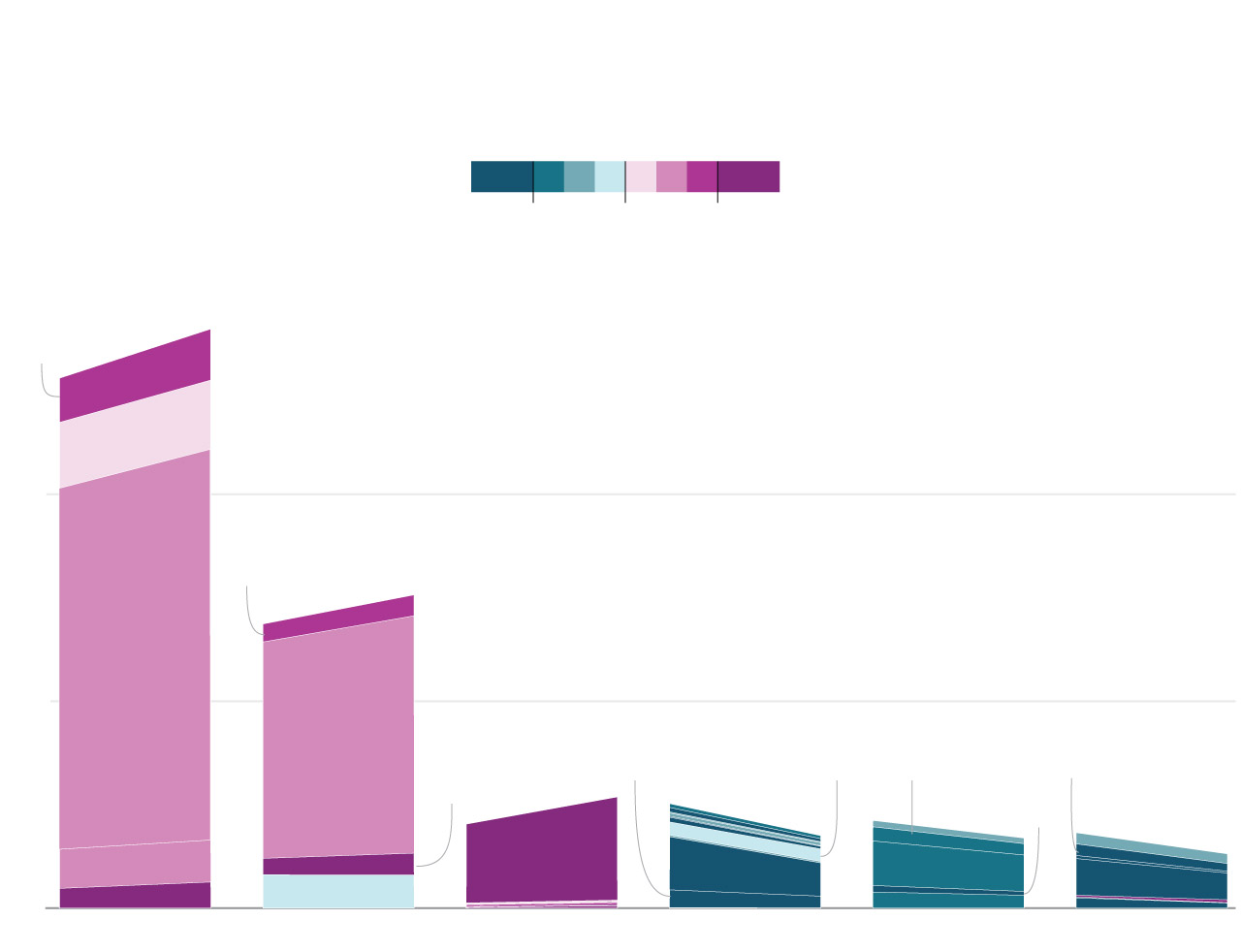
Earlier in the year, executives repeatedly warned investors and analysts about tariffs, trade and an uncertain policy environment. Those concerns came after a flurry of spring tariff announcements rattled markets and companies alike.

But markets came roaring back in the second half of the year after trade tensions settled down. By the fall, the effective tariff rate had settled to below 20 percent — more than U.S. companies have paid in decades but a far cry from threats of tariffs of 100 percent or more that came from both the U.S. and China in April.
Story continues below advertisement
As that shock wore off, executives turned theconversation way from external conditions, with mentions of trade-related words falling by 31 percent and references to the economic environment dropping by 20 percent. Instead, they focused on their companies’ achievements: Growth and strength were dominant themes, with executives describing positive results as a product of their own decisions and execution.
“Transitioning into the third quarter we moved away from tariffs that could shut down trade,” said Claudia Sahm, an economist with New Century Advisors. “Companies were talking more about how well they were able to manage these tariff costs and push them back to suppliers.”
For instance,in the spring, United Parcel Service CEO Carol Tomé cautioned that “tariffs are not good for trade” and mentioned “uncertainties around trade policies.” By the fall, she struck a different tone: “We’re witnessing the most profound shift in trade policy in a century,” Tomé told investors and analysts. “At UPS, this is our domain.”

Executives turned the spotlight away from the challenging business climate and toward their own achievements from one quarter to the next. The shift may have been a reflection of stronger economic growth as gross domestic product — the sum of all goods and services produced by a country — grew at an annualized rate of 4.3 percent during the third quarter.
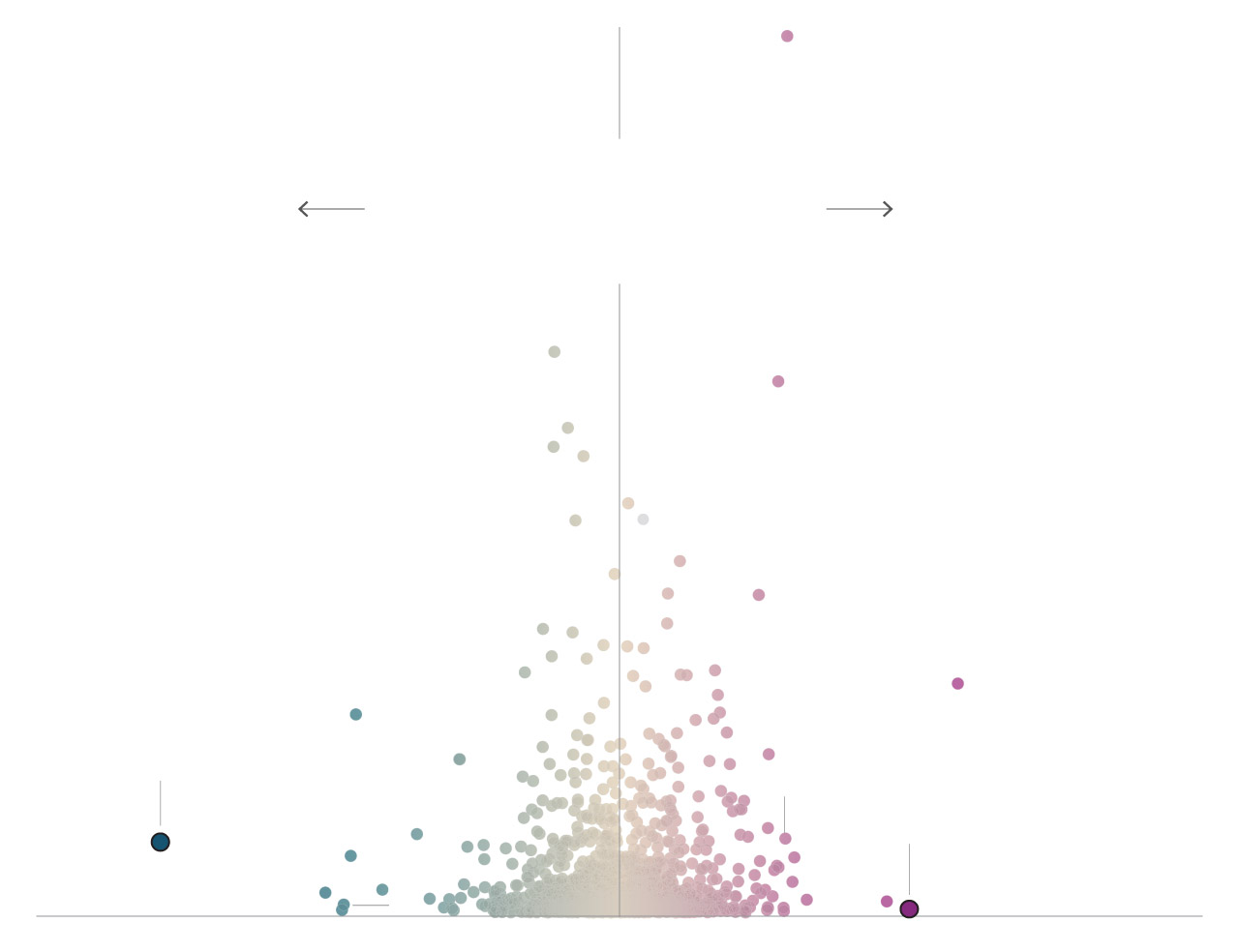
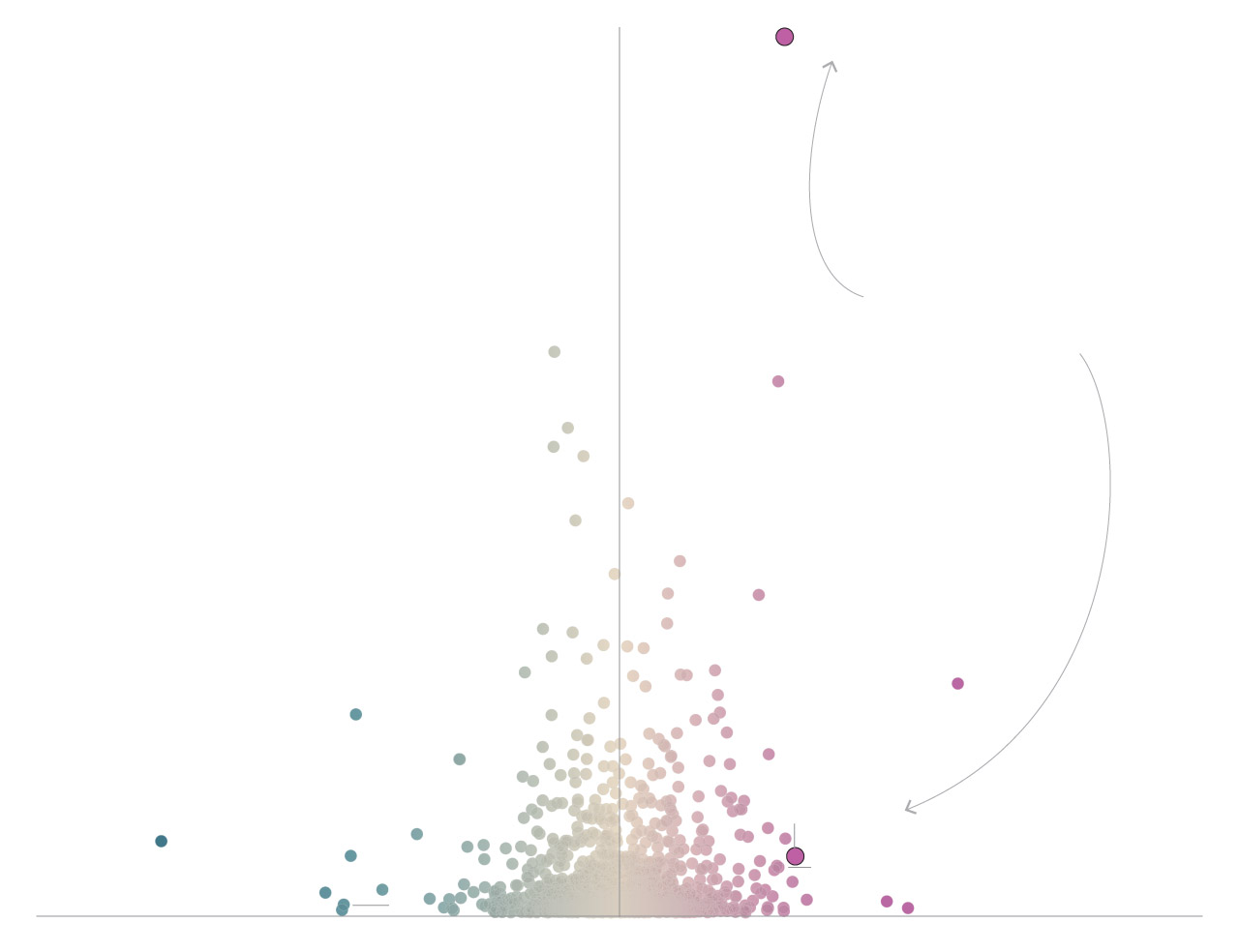
Warnings about the economy were replaced by words like “accelerate,” “strengthen” and “robust,” each of which increasedbetween 16 and 32 percent in the third quarter, The Post found.
Wells Fargo shifted from being “cautious during periods of economic uncertainty” to saying that “we love the fact that we are a U.S.-focused bank that benefits from the strength of our nation’s economy and markets.” The manufacturing conglomerate 3M went from navigating an “uncertain macro environment” to having “delivered another strong quarter … against a backdrop that is largely unchanged and generally soft.”
The shifting language reflects how corporate leaders tend to be more optimistic when talking about their own companies, and less so when describing the economy, said Benjamin Finzi, a Deloitte managing director who leads its Global CEO program.
“The more specific the question is, the more optimistic they become,” Finzi said, adding that the second half of 2025 was characterized by“an expectation of growth.”
The word “disciplined” also became a favorite, as executives touted their efforts to keep costs down.

Mentions of artificial intelligence rose 31 percent from the second to the third quarter, according to The Post’s analysis, and “AI” became the single most distinctive word of the fall earnings season.
“These companies feel like they have to say they’re doing something with AI, like in ’99 or 2000 where they had to say they were doing something with the internet,” said Scott Wren, senior global market strategist at Wells Fargo Investment Institute.
For the largest technology companies, that shift reflected investment in data centers and other infrastructure. In some cases it was a euphemism forlayoffs, or used to justify a lack of hiring. Executives from the transportation company C.H. Robinson said technology and automation had brought about a 40 percent increase in productivity since 2022, as the company has sought to “decouple headcount growth from volume growth.” While touting “many programs from an AI perspective,” Air Products CFO Melissa Schaeffer linked savings to “headcount and productivity actions.”
Executives largelyheld their tongues on one major economic issue: immigration. The word “immigrant” was never mentioned by executives in their presentations in either quarter. Four companies briefly mentioned ‘immigration policy’ in the summer alongside concerns about trade and taxes, but those references vanished entirely by fall.Across both quarters, only three companies used the word “visa” in the context of immigration.
Jeffrey Sonnenfeld, a Yale University business professor known for his prolific discussions with corporate leaders, said companies may be intentionally avoiding the subject, trying not to antagonize policymakers.
“There is a fear of making statements that will rankle the [Trump] administration, and this influences what they will say on an earnings call,” Sonnenfeld said. “They’re not rejoicing; they’re in a state of fear right now. And they are cautious in terms of how they’re investing their dollars.”
Experts also caution that the optimism shown in earnings calls represents a view of the U.S. economy from the top — many are publicly traded companies with huge market shares. Meanwhile, consumer sentiment grew increasingly dour throughout 2025, according to a widely followed metric from the University of Michigan.
The job market continued on a stagnant path in the final months of the year, with relatively few layoffs even as few new jobs were created. Hiring was notably worse among small businesses, and a surge in corporate bankruptcies rattled vulnerable sectors such as retail and industrials. Inflation remained elevated at 2.7 percent in December.
“There is a highly skewed dual economy, as even within the business community it is a tale of two cities,” Sonnenfeld said.
About this story
The Washington Post analyzed earnings call transcripts from nearly every S&P 500 company downloaded from S&P Capital IQ Pro. The analysis covered calls from three quarters: Q3 2024, Q2 2025 and Q3 2025.
Reporters focused on the prepared remarks section of each call, where executives present their narrative about company performance. When comparing year-over-year or quarter-over-quarter trends, The Post analyzed only companies that held earnings calls in both time periods.
The Post used computational text analysis to identify which words and phrases distinguished one time period from another. To ensure consistency, we combined different forms of the same word — such as “tariff” and “tariffs,” or “weak,” “weakness” and “weakening” — treating them as a single concept. However, words with distinct meanings were kept separate. For example, “economy” (macroeconomic conditions) was distinguished from “economics” (unit economics or profitability). Common words that appear frequently in corporate language but carry little distinctive meaning — such as “business,” “quarter,” “million,” months of the year and filler words — were excluded. To identify distinctive words, we used a weighted log-odds ratio, which accounts for how much more frequently a word appears in one group compared with another while ensuring it is used by multiple companies rather than just one outlier. The same methodology was used for two-word phrases. Lawrence Evalyn at Northeastern University advised on text analysis.
View this Washington Post article CLICK HERE
 Media Air Base, LLC
Leave a comment