Unregulated gambling on politics: What could go wrong? | Opinion
With prediction markets hitting the mainstream, it’s clear that more oversight is needed – and that the Trump administration isn’t going to provide it.
USA TODAY
Jan. 7, 2026, 4:31 a.m. ET
In the days leading up to the arrest of Venezuelan President Nicolás Maduro, a user on the predictions market website Polymarket made nearly $33,000 worth of bets. After U.S. servicemembers conducted the military operation that led Maduro and his wife to be taken to New York City to be tried for narco-terrorism, the user’s fortune had grown to more than $436,000.
Who’s behind the account is unclear – if they’re someone with knowledge of the situation in Venezuela before news outlets were covering it, or if they just had an extraordinary stroke of luck. The user’s profile says they joined in December 2025 and placed bets on four positions.
What is clear, however, is that prediction markets like Polymarket and Kalshi are becoming a regular fixture in the United States. These sites swear they aren’t gambling – they’re simply offering people the opportunity to buy futures contracts, according to their leadership. However, it sure seems a lot like betting. You can buy futures contracts for anything – from sports to politics, crypto prices to awards shows. You can use these websites in all 50 states – even those that have outlawed gambling.
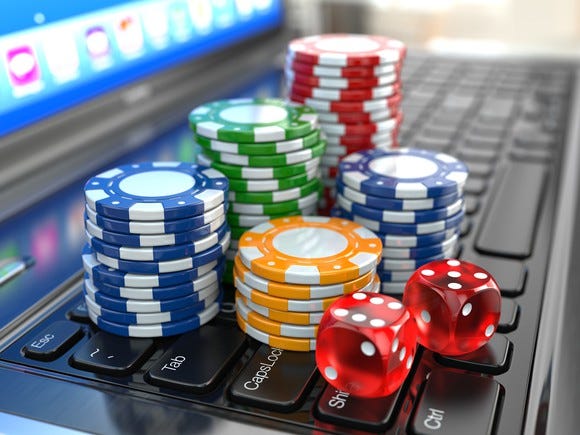
People bet billions of dollars on the results of the 2024 election, and the markets proved to be better at predicting President Donald Trump’s second term. By the end of the decade, experts anticipate that prediction markets could be trading a trillion dollars in volume each year.
But with prediction markets hitting the mainstream, it’s clear that more oversight is needed – and that the Trump administration isn’t going to provide it.Need a news break? Check out the all new PLAY hub with puzzles, games and more!Opinion: Trump promised he’d end forever wars. Now he’s starting one.
Prediction markets are gamifying politics
The public consensus on prediction markets and gambling more broadly (even though prediction market websites are notably not classified as gambling by law) varies drastically depending on its source. According to a poll promoted by Kalshi, 90% of Americans say their peers should have access to prediction markets.
Meanwhile, a 2025 survey from Sacred Heart University found that 6 in 10 Americans are concerned about the rising prevalence of sports betting, in particular, which accounts for the vast majority of transactions on Kalshi and Polymarket.
The American Gaming Association found that over 57% of American adults participated in gambling in some form or another in the past year. In March 2025, the American Psychiatric Association found that 28% of Americans are gambling online daily.
It’s not impossible to make some serious money off of gambling – it’s just very, very unlikely. The average person is not making a $400,000 profit on positions taken on a whim, but they’re likely not betting tens of thousands of dollars in the first place (nor do they likely have insider information).
Get the The Right Track newsletter in your inbox.
Columnist Nicole Russell on conservative values, family and religion.
Gambling addiction isn’t the only worrying element of prediction markets. There are concerns like the one that arose over the Venezuela bet, or like the one user who correctly guessed 22 of Google’s 23 most-searched terms and made $1 million in 24 hours.
What about interference from wealthy donors inflating the numbers? And, of course, there’s the unsettling feeling that we are gamifying our existence, denying others humanity by making their every move something to bet on. Opinion: Now that Mamdani is sworn in, New Yorkers can’t tune out
My prediction? Congress will be too late to regulate.
Rep. Ritchie Torres, D-New York, is trying to combat the use of insider information in prediction markets. Kalshi’s leaders told Business Insider that they already prohibit insider trading.
Considering how unprepared our Congress seems to be in handling artificial intelligence, cryptocurrency or even social media, it looks like lawmakers will be late as usual when it comes to regulating prediction markets. – Website
I’m not in the business of telling people what to do with their money. There’s a reason people enjoy it – it’s fun when you win! I’m even cautiously supportive of the three casinos opening in New York City in the coming years. So long as people are aware of the risks, I see no harm in a little wager between friends, a game of poker or even the occasional parlay.
It’s clear that prediction markets are here to stay, whether the government regulates them or not. They’re definitely going to be a part of the 2026 midterm elections. Trump and Congress must decide whether they’re going to care about the implications that prediction markets could have on elections in the United States going forward.
Follow USA TODAY columnist Sara Pequeño on Bluesky: @sarapequeno.bsky.social – Website
View this USA Today article CLICK HERE
 Media Air Base, LLC
Leave a comment