Do Tariffs Cause Inflation? New Studies Offer Surprising Answer
Trump’s tariffs haven’t caused the surge in prices that many economists predicted
Jan. 5, 2026 3:14 pm ET
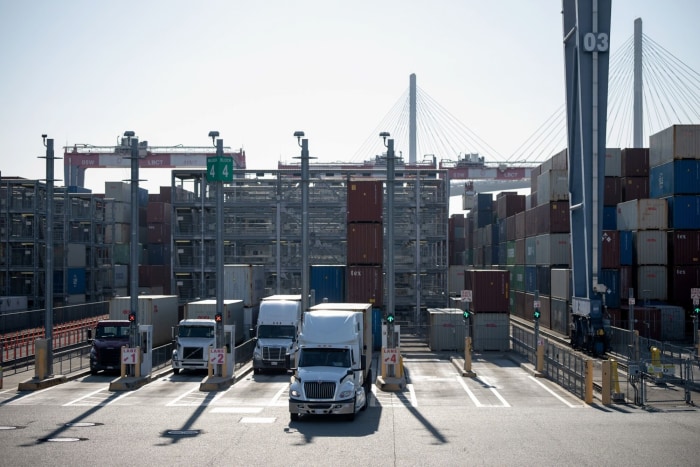
Two research papers conclude that tariffs tend to hurt the economy. Eric Thayer/Bloomberg News
Quick Summary
- Two studies indicate that past tariff increases didn’t cause significant inflation.View more
The highest tariffs in almost a century haven’t caused the massive surge in inflation many economists feared. But that shouldn’t have come as a surprise, according to two new studies.
Economists at the Federal Reserve Bank of San Francisco combed through data from 1886 to 2017 and found that previous tariff increases usually didn’t lead to higher inflation. On the contrary: They slowed down price growth. A separate recent paper by economists at Northwestern University found that inflation picked up following tariff increases, but only a little.
That’s the good news. The bad news: Both papers conclude that tariffs tend to hurt the economy and that a blow to consumer and business demand likely explains why the impact on inflation is so limited.
When President Trump announced sweeping tariffs last spring, economists widely predicted surging inflation, a stronger dollar and a significant slowdown in economic growth. That largely hasn’t come to pass. Inflation has picked up since April and remains well above the Fed’s 2% target, frustrating voters, but it hasn’t surged. Hiring is down and unemployment inching up, but the economy is chugging along. At the same time, the Trump administration’s predictions of a manufacturing renaissance also haven’t materialized.
“Mainstream economics has something to answer for on this,” said Jonathan Ostry, an economist at the University of Toronto.
Basic economic principles suggest that higher tariffs should push up the price of imported goods, typically leading to a one-time increase in inflation. But historical data paints a more nuanced picture. The San Francisco Fed economists, Regis Barnichon and Aayush Singh, found that a 1-percentage-point increase in tariffs went along with a 0.6-percentage-point drop in inflation.
The economists also found that rising tariffs went hand in hand with rising unemployment, which may help explain the inflation riddle. Tariff shocks create economic uncertainty, weighing on businesses and consumers. As the economy slows, demand for goods and services falls, weighing on prices.
The Northwestern economists, Tamar den Besten and Diego Känzig, looked at data from 1840 to 2024 and found that tariff increases were usually followed by slightly higher inflation. But the impact was small because rising import costs were counterbalanced by falling demand as imports and exports dropped and manufacturing activity contracted.

While overall economic growth has been healthy since the tariffs took effect last year, signs of weakness have begun to emerge. Hiring has slowed to a crawl since April, prompting the Fed to lower interest rates three times in the second half of 2025. Meanwhile, a key index tracking activity in the manufacturing sector fell to a 14-month low in December.
Some economists argue that Trump’s tariffs will eventually have a bigger impact on inflation as companies gradually raise prices. Others point out that the real tariff rates companies actually pay are lower than the headline numbers, thanks in part to loopholes and exemptions. A new working paper by economists at Harvard and the University of Chicago found that the real average tariff rate was 14.1% as of late September, well below the headline number of 27.4%.
Just because past tariff increases hurt the economy but didn’t lead to higher inflation doesn’t mean history is bound to repeat itself, said Ostry. The last time U.S. import duties were as high as they are today was in the 1930s, and back then the U.S. was on the gold standard and Manhattan was full of factories. “The world is different today,” he said.
Write to Konrad Putzier at konrad.putzier@wsj.com
View this Wall Street Journal article CLICK HERE
 Media Air Base, LLC
Leave a comment