The ‘bonkers’ plan to build a brand new city for one million people
Proposal for metropolis the size of Bristol in push to solve housing crisis Pui-Guan Man Property Correspondent. Emma Taggart Economics Reporter
Related Topics
15 November 2025 12:00pm GMT

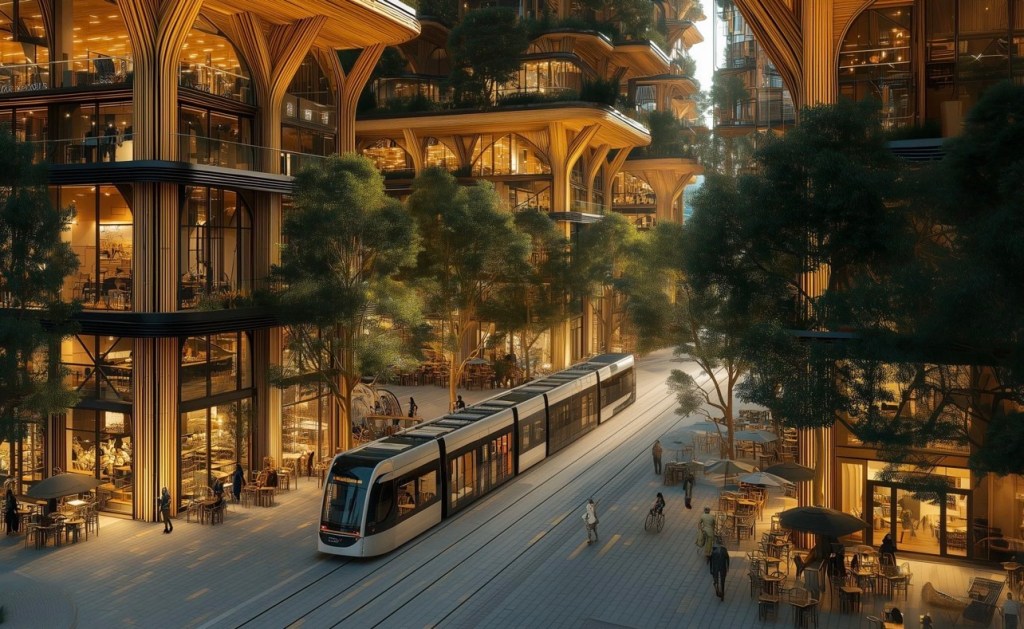
Skyscrapers made of wood, “6G” networks, solar energy and small modular reactors serving a metropolis filled with Britain’s most ambitious families.
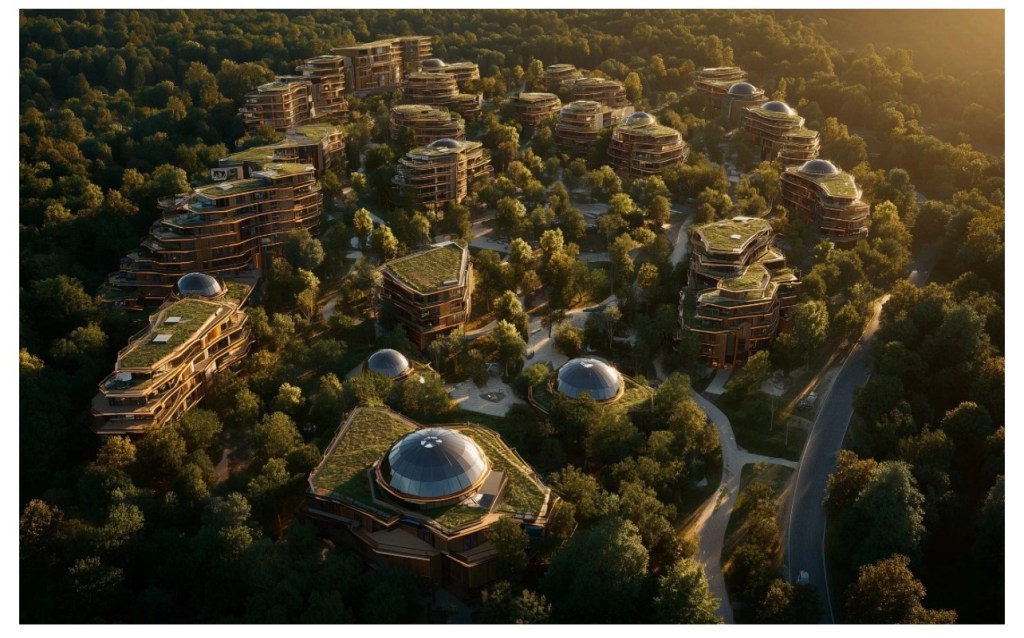
Welcome to Forest City 1, the working title of the country’s first new city in 50 years.
Shiv Malik, a former investigative journalist, and Joe Reeve, a co-founder of Looking for Growth (LFG), a grassroots political movement focusing on expanding the economy, have hatched a £100bn plan to build a city the size of Bristol.
The project would be built on 45,000 acres of land on the Cambridgeshire-Suffolk border between Newmarket and Haverhill.
The duo hope the new metropolis will one day be home to one million people – with 12,000 acres set aside for woodland.
To some observers, the project is nothing more than a mad pipe dream that is unlikely to see the light of day. But to supporters, it is a DIY attempt solve the country’s housing crisis amid growing disillusionment with the Government, and a way to kickstart the economy.
“Let’s fight for a grander vision … One that is independent of the central state but also not bound to the private developer mindset which itself lacks any real vision,” a website promoting the project reads.
“We need something that points the way on the world stage and lets Britain once again be a by-word for ambition, invention, creativity and entrepreneurialism.”
The proposals have captured the imagination of architects, planners and other industry figures – who have joined a dedicated WhatsApp group to discuss the project.
An online petition pledging support has gained 700 signatories, including Grant Fitzner, the director of macroeconomic statistics at the Office for National Statistics; Dame Patricia Hewitt, a former trade and industry secretary; and Professor Tim Leunig, a former advisor to two Conservative chancellors and three housing secretaries.
Suggestions put forward by supporters include: a transport system consisting of 5,000 self-driving Tesla Robovans (rather than trains or trams), roads designed to support driverless Waymo cars and covered streets resembling the porticoes of Bologna to shield visitors from Britain’s dreary weather.
‘No time to waste’
Malik admits the sheer scale of the ambition will raise eyebrows. But he says: “It comes with an element of dreaming, but people are ready to do something serious about this because the situation is so desperate.”
While the Government is seeking to address the same issues through dozens of new towns in England, Malik believes the “only way that makes sense is to build at city scale, not at town scale”.
“I think lots of people have been disappointed that we have been presented with 12 sites for new towns, after a year of real consideration by experts, [of which] this Government has only plumped for three. We don’t have time to waste any more.”
Malik says Forest City will “easily cost over £100bn”, with an estimated £200m required for the first stage, including the master planning and site surveys. The city would be privately funded.
A number of private individuals and venture capital firms have reached out to pledge funding to the project, Malik says. He and Dame Patricia met with Surinder Arora, the billionaire hotelier, on Friday.
Leunig, who advised Sajid Javid and Rishi Sunak, calls Forest City “a bold and ambitious idea” that is “exactly what the country needs”.
But not everyone is enthusiastic.
“This just is not credible,” says Jackie Sadek, a former specialist adviser to the Government on urban regeneration. “Who are these guys? Do they have any expertise at all?
“I appreciate that strange things do happen but not in the property development industry. I wouldn’t be down at Paddy Power putting money on this one.”
One senior regeneration specialist says: “I admire their energy and ambition but fear the idea is completely bonkers.
“There’s no public transport, no roads or rails. If you look at the history of where towns and cities get built, they get built where they need to be and where you can get to, so the most fundamental element is already broken.”
Owners of the land earmarked for development include Sheikh Mohammed Bin Rashid al-Maktoum, the prime minister of Dubai. It is unclear whether the Sheikh is supportive of the project.
Maxwell Marlow, of the Adam Smith Institute, a think tank, is also sceptical. “It’s wonderful thinking, I’m fully behind it,” he says. “However, do I think this is going to happen? No, because there are viability concerns about planning and policy.”
Attempt to ‘change the narrative’
Rico Wojtulewicz, of the National Federation of Builders, sees the project as an attempt “to change the narrative”.
“Governments historically don’t like to build too many homes in case house prices drop,” he says. “The one way a government can get around that is by building a city, because you set the prices and it doesn’t necessarily compete with surrounding places – it’s a place of its own.”
Frustrations with housing affordability in the South of England is a key driving force behind interest in Forest City, with property prices outstripping wage growth over the past two decades.
It has made the project’s plans for 400,000 affordable homes a compelling proposition for twenty and thirty-somethings who feel property ownership has become a distant hope.
For those happy to be a guinea pig, developers tout the possibility of purchasing a family home for £350,000. One idea is to target young people who might prefer to invest in an initiative that will provide a home once the city is built, rather than save for a mortgage.
Adrian, a 31-year-old planner from Dorset, is one of those who has signed the petition and is a member of the Forest City WhatsApp group. He is interested in becoming one of its first residents.
“I’d love to one day get married and move in somewhere, but I haven’t even started that mortgage journey, or purchasing a house or land,” he says. “The prospect gets me quite nervous – how come this has felt so closed off to me?”
The notion of a new city trying out innovative concepts is also appealing for Adrian, who believes Britain’s cultural conservatism is stifling its creativity.
“I think of England as a place which doesn’t tend to build new, unless it’s a one-off building within a city or town centre, or a set of the same Noddy ‘toy town’ houses in suburbs that have no real cohesion in terms of a sense of identity,” he says.
“Seeing people in various fields of architecture and industry, discussing ideas for a new city … It gets me thinking, ‘Wow, I could be contributing to a new vision in England, that I could perhaps move into one day.’”
Malik says: “This isn’t about ‘building a city’. This is about solving very specific problems in the UK – housing, infrastructure, growth – which we think are best resolved via building a city.”
Parliamentary approval will be sought for a development corporation, called the Albion City Development Corporation (ACDC). These organisations are created by the Government to oversee large-scale projects and have compulsory purchase and planning powers.
Malik says a “silent majority” of people in their mid-40s and younger are “desperate for viable solutions to their very material problems”.
“It’s not all about Palestine and trans rights,” says Malik. “It’s about paying the rent and building a family.
“They just haven’t had political representation. They certainly haven’t had ambitious ideas put to them. Once you do that, it’s amazing how much support there is.”
View this Telegraph (UK) article CLICK HERE
 Media Air Base, LLC
Leave a comment