What is universal basic income, and can it solve the affordability crisis?
Andrea Riquier USA TODAY
What were the outcomes of Stockton’s UBI program?
How does AI influence UBI’s growing popularity?
What new item returns to Chick-fil-A’s holiday menu?
As Americans struggle with the high cost of living, an old idea is getting a fresh look.
In dozens of pilot programs around the country, policymakers and researchers are exploring what happens when Americans receive regular, dependable cash payments with no strings attached. The concept is often called universal basic income (UBI), and sometimes guaranteed income. It’s been around for a while, but has benefitted from some high-profile advocates and recent real-life tests. And as the affordability crisis drags on and AI penetrates the job market, it may gain in popularity.
Michael Tubbs, mayor of the mostly low-income city of Stockton, California from 2017 to 2021, decided to create a UBI program there after realizing that “so much of the job of government was solving for the problems caused by poverty. But we weren’t doing enough to solve for poverty itself,” he said in an interview with USA TODAY.
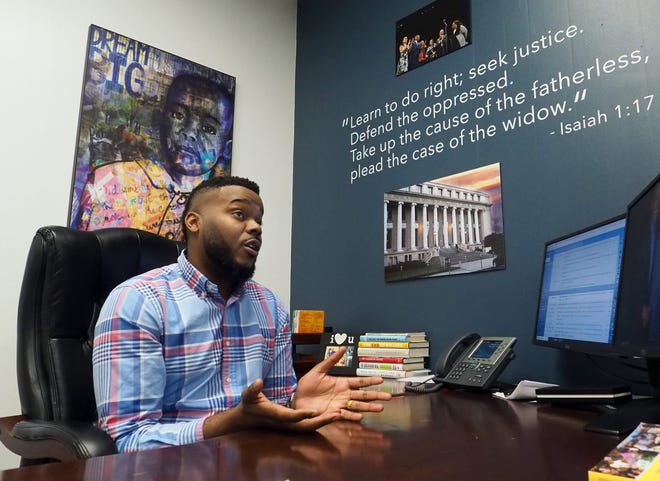
Tubbs and his administration were inspired by research by Dr. Martin Luther King, Jr., who began to advocate for such a policy in 1967. “We are likely to find that the problems of housing and education, instead of preceding the elimination of poverty, will themselves be affected if poverty is first abolished,” King wrote.
“I thought Stockton had to be Ground Zero for solutions,” Tubbs said. The city had a high poverty rate, a diverse population, and was in the national limelight after filing for municipal bankruptcy a few years earlier.USA TODAY Shopping: Shop sales in tech, home, fashion, beauty & more curated by our editors.
“It also is personal to me as someone who grew up in poverty, who grew up with a mother who worked incredibly hard and still every month had to figure out how to pay bills,” he said. “It felt like a way to honor that sort of experience was to say, how do you make it so that no other mother, no other father, no other child, has to experience poverty in that way again?”
The Stockton program gave $500 monthly cash payments to 125 residents between February 2019 and January 2021. Recipients had to live in areas at or below the city’s median household income level of $46,033 and could use the money for whatever they needed.
Researchers compared the lives of the participants to those of 200 other city residents who did not receive payments. They found that the participants had “lower rates of income volatility… lower mental distress, better energy and physical functioning, greater agency to explore new opportunities related to employment and caregiving, and better ability to weather pandemic–related financial volatility.”
Tomas Vargas was born and raised in Stockton, and now lives there with his wife and two children. When the couple heard about the program on the evening news, he said, they laughed. Even after Vargas was selected as a participant, he was so wary of the idea of a continuing income that he horded the checks to use them like a windfall.
But once he and his family became comfortable with the extra income, it gave him confidence, Vargas told USA TODAY. He had been working part-time in a warehouse, wanting to look elsewhere for work, but reluctant to take time away from the job. Now, he’s in the nonprofit sector and his wife has also gone back to work.
“It really gave me financial stability, and built up my financial management,” he said. Even better, those life changes improved his marital relationship, and the family dynamics. “I changed my mentality on being present as a father and a husband, I’m more involved with my family.”
Does universal basic income work?
UBI advocates often feel pressured to show it provides speedy, quantifiable results, said Leah Hamilton, principal investigator for the Family Economic Policy Lab at Appalachian State University, such as seeing participants “immediately go back to school or start opening businesses.”
That sometimes happens, Hamilton said, but more often results are less dramatic. Extensive previous research shows that escaping poverty takes literally decades of “nothing going wrong,” she explained. “Just those little emergencies will really set you back. If you need a major car repair and you can’t fix your car, you lose your job. And then if you lose your job, then you lose your house and so on.”
Being able to rely on a basic level of income gives people teetering on the edge of poverty not just opportunity, but stability, Hamilton said. “I see people saying I cannot imagine where my life would be right now if I hadn’t had this. They can weather those little bumps.”
Many UBI advocates believe that the government stimulus checks that were sent out during the COVID-19 pandemic to smooth over the shock of immediate job loss for so many millions of Americans are a proof of concept for the idea.
The details of such a program were debated, said Scott Santens, founder and CEO of the Income To Support All (ITSA) Foundation, “but it was really just like full agreement: let’s get cash to people.” The lockdowns were a reminder, many advocates say, that hard times can happen to anyone, and a tailored guaranteed income program can address such circumstances.
Santens also likes to point to a very different program, the casino revenues distributed to members of the Eastern Band of the Cherokee Nation in North Carolina, as another example of what works.
Beginning in 1997, a casino operated by the tribe began to distribute twice-yearly payments of approximately $4,000 per person to its members. Several hundred tribal children were already enrolled in a long-term study sponsored by Duke University that compared the mental health of white rural youths with that of Native children. The income distributed to the Native children but not the white children offered an organic experiment in how universal basic income could influence health and other outcomes.
Children whose families received the casino payments attended school more, completed more years of education, and had better interactions with their parents, research showed. There were reported reductions in crime for both teenagers and adults, as well.
“There are lots of positive impacts from (the casino dividends) that I think says a lot not only about UBI, but about how important it is to start early,” Santens said, “because the studies show the impacts were larger for … kids who started receiving it at birth versus the kid who started receiving it, say at age eight.”
What is the future of universal basic income?
Santens believes that the advent of AI, and the very real likelihood of enormous job losses throughout the economy as it automates many jobs humans have always done, are a strong argument for broader support for guaranteed income. The entrepreneur Andrew Yang, who ran for president in 2020, advocated for a form of UBI in his campaign. More recently, tech titans like OpenAI’s Sam Altman have also begun to support the idea.
Right now, UBI advocates continue to consider whether some type of program can replace some of the existing welfare safety net, Hamilton said. But the argument for implementing is much more elemental. “In the wealthiest country in the world, can we set up a system where millions of people are not getting left behind in these economic swings?” she said.
View this USA Today article CLICK HERE
 Media Air Base, LLC
Leave a comment