Trump Meets With Xi, Declares Immediate Cut to Tariffs
Leaders emerge from summit with steps to de-escalate trade tensions
By Josh Chin and Meridith McGraw
Updated Oct. 30, 2025 3:41 am ET
Quick Summary
- The U.S. is lowering tariffs on Chinese goods to 10% from 20% in exchange for China’s cooperation on fentanyl precursor chemicals. View more
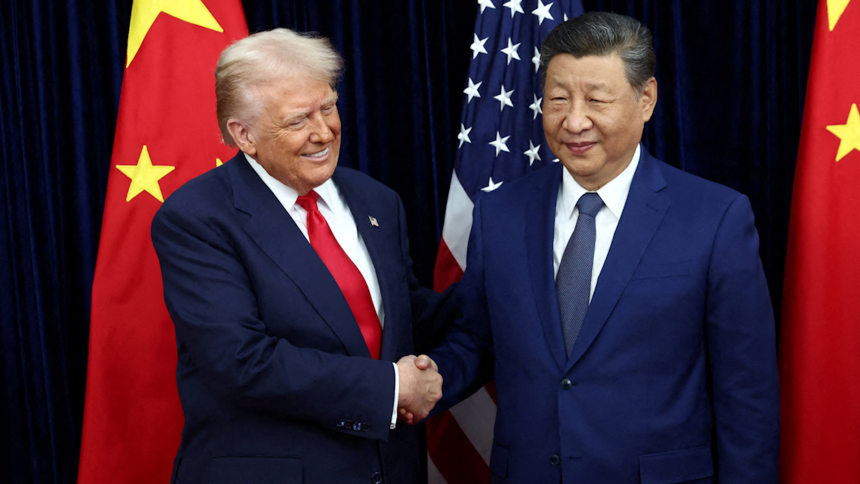
BUSAN, South Korea—President Trump and Chinese leader Xi Jinping met face-to-face for the first time in six years on Thursday, emerging from what Trump called “an amazing meeting” with an immediate U.S. cut in tariffs on Chinese goods.
The president said that the U.S. was lowering tariffs on China in exchange for Beijing’s cooperation in cracking down on the export of chemicals used to produce fentanyl.
The decision was part of a broader framework to reduce trade tensions that included what Trump said was an agreement by China to remove a roadblock to the global trade of Chinese rare-earth elements, which are vital to the manufacture of products from medical equipment to EV motors.
The roughly 90-minute meeting at an air base in South Korea represented an attempt by the two leaders to find a truce in a bruising fight between the two superpowers over trade and technology.
“Overall, I guess on the scale of from zero to 10, with 10 being the best, I would say the meeting was a 12,” Trump told reporters on his way back to the U.S. aboard Air Force One.
China, in a statement released shortly after the summit ended, said the U.S. and China “reached a consensus on resolving” important economic and trade issues.
Speaking on Air Force One, Trump said he thought that the two countries would be able to sign a trade deal “pretty soon,” and that they didn’t have too many stumbling blocks left.
Trump said that “tremendous amounts of the soybeans and other farm products are going to be purchased immediately” by China. American soybean farmers have been in a panic this harvest season with China absent from the export market.
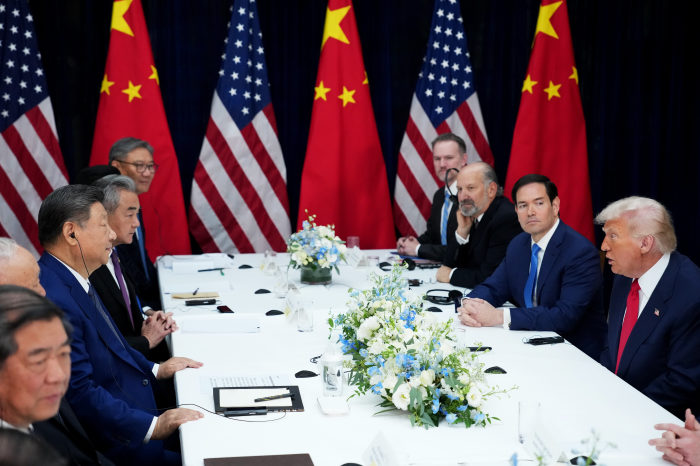
Xi and Trump with their teams at the meeting. Andrew Harnik/Getty Images
China bought several cargoes from U.S. grain handlers earlier this week, with each shipment holding about two million bushels of soybeans. U.S. Secretary of Agriculture Brooke Rollins said on social media on Wednesday that the purchases were a “great start” and “give U.S. producers the opportunities they’ve earned.”
Trump and Xi also came to an understanding that China would ease controls that Beijing has imposed on rare-earth exports, said Jamieson Greer, the U.S. trade representative. China dominates the manufacturing of the minerals, and its recent restrictions have hurt Western manufacturers.
Trump said Thursday that the “roadblock” to importing rare earths was gone. In October, Beijing angered the Trump administration by further enhancing restrictions on the export of rare earths, including increasing the number of controlled rare-earth elements. These rules are expected to be delayed by a year as part of a trade agreement.
But many industry watchers said the rare-earths issue appeared to be unresolved, with the expectation that China would maintain export-control procedures that it first put in place in April.
Separately, the U.S. has pressed China for years to do more to control the export of so-called precursor chemicals used to make fentanyl, a synthetic opioid blamed for more than 100,000 drug-overdose deaths in the U.S. Trump said he was lowering a fentanyl-related tariff on China because “they’re taking very strong action” on the drug.
The U.S. is lowering the fentanyl tariff on Chinese goods to 10% from the current 20%, a move that Trump said would bring the average tariff on most Chinese imports to 47% from 57%.
Greer also told reporters that the U.S. would postpone plans to impose Section 301 port fees on Chinese-owned or Chinese-built vessels, an announcement that comes on the heels of South Korea agreeing to invest $150 billion in American shipbuilding.
Trump spoke positively about the outcome of the meeting with Xi. The president said he would travel to China in April, and that Xi would follow with a visit to the U.S.
“I think it was a very friendly meeting. It was a good meeting for two very large, powerful countries,” Trump said.
Trump and Xi entered the summit with a framework hashed out by U.S. and Chinese negotiators earlier in the week. Xi said Thursday morning that the trade teams had made “encouraging progress” that laid the foundation for the meeting in Busan.
Trump added that the subject of Taiwan—the most dangerous potential flashpoint between the U.S. and China—never came up in the meeting. Fears have been percolating in Taiwan that Trump’s dealmaking instincts might lead him to trade away U.S. support against Beijing’s territorial claim to the self-ruled island in exchange for concessions on trade.
Trump said that he and Xi discussed the war in Ukraine, including how China and the U.S. could work together “to get that war finished.” China has emerged as Russia’s strongest political and economic backer since Moscow’s invasion of Ukraine, including providing dual-use material that has been critical to the Russian military’s ability to wage war against Ukraine.
As the meeting began on Thursday, sitting across from Xi at a long white table in a small room at Gimhae Air Base, Trump said it was a great honor to be with the Chinese leader.
“President Xi is a great leader of a great country, and I think we’re going to have a fantastic relationship for a long period of time,” he said.
Xi, speaking to Trump through an interpreter, said: “I always believe that China’s development goes hand-in-hand with your vision to make America great again. Our two countries are fully able to help each other succeed and prosper together.”
Write to Josh Chin at Josh.Chin@wsj.com and Meridith McGraw at Meridith.McGraw@WSJ.com
U.S.-China Tensions
Tracking the complicated relationship of the world’s two largest economies
Podcast series: China Builds Influence With Infrastructure
Trump Tells Asia Allies: It’s Your Turn to Boost Military Spending
After Demolishing the U.S.-China Relationship, Trump Is Rebuilding It His Way
Trump, Xi to Discuss Lowering China Tariffs for Fentanyl Crackdown
China’s New Strategy for Trump: Punch Hard, Concede Little
The U.S. Is Trying to Drive a Wedge Between Argentina and China
How China Took Over the World’s Rare-Earths Industry
Going All In on U.S. Trade Battle, China Probes Qualcomm
China Secretly Pays Iran for Oil and Avoids U.S. Sanctions
Copyright ©2025 Dow Jones & Company, Inc. All Rights Reserved.
What to Read Next
After Demolishing U.S.-China Relationship, Trump Is Rebuilding It His Way
UPDATED 8:00 PM EDTD OCTOBER 28th 2025
A summit between the president and Chinese leader Xi Jinping marks renewed engagement in a long-term superpower rivalry.
Trump, South Korea Reach Terms on Trade Deal
UPDATED 8:00 PM EDT OCTOBER 29th 2025
The surprise breakthrough follows months of contentious talks over $350 billion in investments Seoul has pledged to America.
Trump Tells Asia Allies: It’s Your Turn to Boost Military Spending
UPDATED 2:00 AM EDT OCTOBER 29th 2025
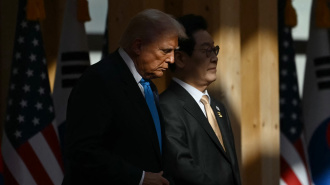
During a six-day tour of a region facing the threat of Chinese aggression, Trump reiterates a message that was largely heeded by European nations.
Global Markets Mixed Ahead of U.S. Interest-Rate Decision
UPDATED 2:00 AM EDT OCTOBER 25th 2025
Futures for the S&P 500 and Nasdaq were higher with more big-tech earnings due and as Trump continues his tour of Asia.
Asian Markets Rise as U.S.-China Talks, Trump Asia Tour Fuel Deal Hopes
UPDATED 9AM EDT OCTOBER 27, 2025
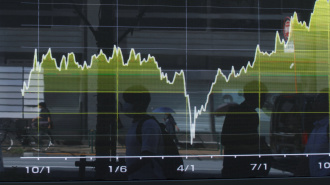
Signs of thawing U.S.-China tensions boosted markets Monday, with Asia indexes and U.S. futures gaining, and sentiment lifted by progress on regional trade deals during President Trump’s Asia visit
U.S. Futures, Global Markets Fall After Hitting Record Highs; Oil, Gold Down
UPDATED 9:00 AM EDT OCTOBER 28, 2025
View this Wall Street Journal article CLICK HERE
 Media Air Base, LLC
Leave a comment