The government shutdown is forcing investors to trade on faith. What they need are facts.
Investors are wary of stocks and earnings viewed through political fog
By John Buran
Last Updated: Oct. 23, 2025 at 6:54 p.m. ET
First Published: Oct. 23, 2025 at 8:05 a.m. ET
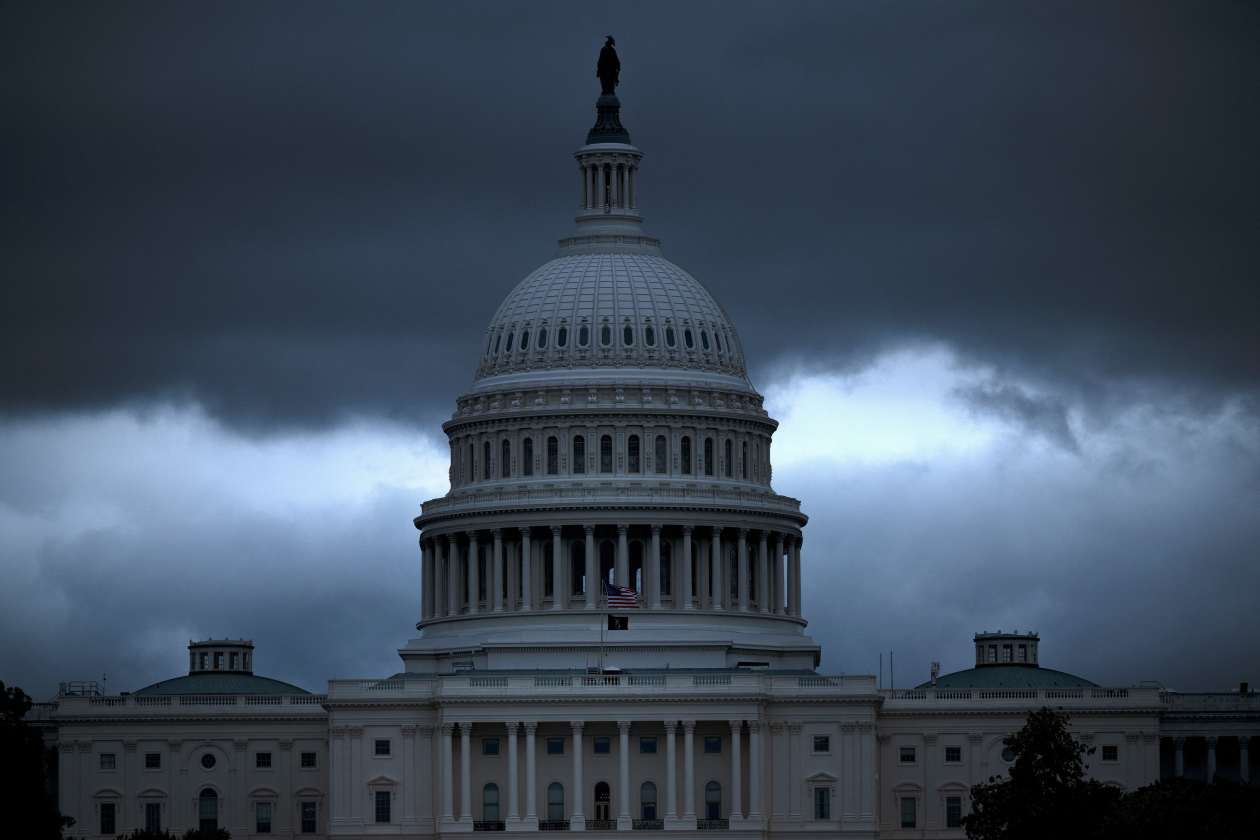
Financial markets depend on confidence in data, in policy, and in how the two align.Photo: AFP/Getty Images
Referenced Symbols
The first Friday of October came and went without new jobs data from the Bureau of Labor Statistics. Investors accustomed to dissecting every payroll figure were left flying blind, forced to rely on private trackers and early state filings that suggested the labor market merely “plodded along” in September.
Just weeks earlier, the BLS had revised its prior-year data, revealing that 911,000 fewer jobs were created than initially reported. That adjustment, based on employer tax records rather than surveys, estimated what many believed was a resilient labor market into one that’s been quietly losing steam.
The missing October jobs report and the downward revision tell a consistent story: The U.S. job engine is slowing, even if official confirmation has gone temporarily dark.
Mark Minervini: Is A Sector Rotation On The Horizon? See All Videos
Read: U.S. economy has lost momentum over the past 2 months, Fed’s beige book finds
This helps explain why the Federal Reserve cut interest rates in September and may continue to ease through year-end. The updated figures support a more cautious policy stance, showing an economy that’s stable but vulnerable beneath the surface. Yet without timely data, both policymakers and investors are left to interpret the economy through fog — trading on faith rather than facts.
Ultimately, financial markets depend on confidence in data, in policy, and in how the two align. When those signals blur, a cautious fundamentals-driven approach is a sound path.
Conflicting signals
Just as the BLS revision exposed U.S. labor-market weakness, the government simultaneously raised its estimate of second-quarter GDP growth, marking the strongest annual rate since late 2024. The upward move reflected resilient consumer spending, a narrower trade gap driven by reduced imports, and a modest rebound in manufacturing and home construction.
Together, these two data points tell an uneven story: Growth looks stronger, but job creation looks weaker. Slower employment gains signal caution among businesses, while robust spending implies consumers are still powering the economy. The tension between the two raises an important question: How sustainable is this growth if job creation continues to soften?
For now, the Fed’s strategy appears to be working in stages. The first rate cut is easing pressure on borrowers without unleashing excess demand. Markets should not mistake stabilization for acceleration. A cooling labor market means households could turn more cautious heading into year-end, especially as inflation progress remains uneven.
Stronger bank lending
Amid the mixed macro signals, one bright spot is emerging: early signs of a lending rebound. Across the banking industry, some institutions reported stronger activity in the second quarter, while others are seeing a pickup in inquiries that could translate into greater origination volumes ahead.
This is significant because lending is one of the first places rate policies become visible. When borrowing costs fall, small businesses revisit expansion plans, homeowners consider renovations and manufacturers weigh capital investments that had been shelved. In that sense, banks are the translators of Fed policy, turning monetary adjustments into real economic activity.
If the Fed follows through with additional rate cuts in December, this momentum could accelerate. Lower funding costs would allow banks to offer more attractive pricing while maintaining credit discipline. Importantly, this is not about relaxing standards but about making sound loans work again under improved affordability conditions.
For investors, the tone of bank commentary in the next earnings cycle will be an important barometer of real-world sentiment. Rising loan demand, even off a low base, could hint at renewed confidence across the business landscape.
Why hiring may stay soft
Despite the potential boost from rate relief, two forces could continue to weigh on job creation in the months ahead.
First is the natural business cycle. As year-end approaches, many companies delay hiring until new budgets are finalized, particularly after a volatile year for costs and consumer demand.
Second is uncertainty around artificial intelligence and automation. While many firms are exploring productivity gains through AI, few have a clear sense yet of how those efficiencies translate into staffing needs. As a result, some are holding off on new hires until the return on those technology investments becomes clearer.
This wait-and-see approach may extend into early 2026, especially if wage pressures ease further and productivity metrics remain in flux. It’s a dynamic like the postautomation slowdowns of earlier cycles, when businesses paused hiring not because of weakness but because of recalibration.
The stock market recalibrates
Companies with stable balance sheets and diversified revenue streams may be better positioned to navigate uncertainty.
For investors, the implications of the new data, and the lack of it, extend beyond borrowing costs. Additional Fed easing could compress bond yields and lending margins, supporting rate-sensitive sectors such as housing, autos and construction. However, affordability challenges and elevated debt levels remain headwinds that could limit how much stimulus flows through to consumption.
The stock market
could see a mixed impact. Softer hiring trends and patchy data may weigh on earnings expectations, even as lower rates lend some valuation support. In this environment, companies with stable balance sheets and diversified revenue streams may be better positioned to navigate uncertainty.
John Buran is president and chief executive officer of Flushing Financial Corp. and Flushing Bank. Flushing Financial is a New York City-based regional bank with $9 billion in total assets.
Also read: Why this earnings season is different: Investors are more interested in companies’ cash than growth
Partner Center
News For You

U.S. stocks are hitting a speed bump. Why the rally could soon resume.
MarketWatch
Oct. 22

China’s New Strategy for Trump: Punch Hard, Concede Little
WSJ
3 hours ago

Trump Pardons Convicted Binance Founder
WSJ
2 hours ago

Intel Stock Rises On Big Third-Quarter Earnings Beat
IBD
11 hours ago

How Trump Sparked a New Era of State Capitalism
Barron’s
6 hours ago

I received an inheritance from my father’s estate, but the executor wants me to give it back. What should I do?
MarketWatch
10 hours ago
Go to WSJ+ DashboardPersonalize Your Experience
What to Read Next

 Media Air Base, LLC
Leave a comment